
The oil and gas industry records some of the highest worker fatality rates of any sector globally. Industry operations take place in hazardous environments such as offshore platforms, high-pressure pipelines, and refineries, where a single undetected failure can lead to a significant incident.
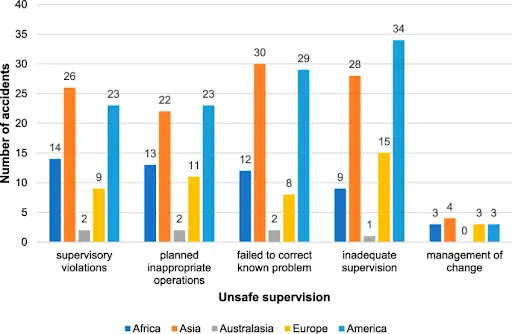
Most of those incidents are preceded by warning signals that existing safety systems never surface. The industry has relied on decade-old, isolated safety programs to manage risk, where Inspections produce point-in-time snapshots and incident reports arrive after the critical window has already closed.
AI in oil and gas safety offers an ‘always-on’ approach with continuous monitoring, predictive analytics, and hazard detection that operates between inspection windows rather than waiting for them. This article covers what that shift looks like in practice, where the measurable outcomes are, and what operators need in place before predictive systems can deliver on their potential.
Why Traditional Safety Systems Struggle in Modern Oil and Gas Operations
Oil and gas operations span some of the most demanding environments in any industry. There are offshore platforms, onshore refineries, transcontinental pipelines, and remote exploration sites running continuously and generating thousands of data points per hour.
Managing safety across that infrastructure cannot be attempted as a single-site problem. Rather, it needs to be tackled as a multi-environment, multi-asset challenge that traditional safety programs were not designed to handle at the current scale.
The structural limitations of legacy safety frameworks are well-documented across studies. Most safety frameworks rely on scheduled inspections, manual incident reporting, and compliance audits to track safety performance. These tools built foundational accountability. They did not, however, build foresight.
Also Read: AI Compliance Monitoring: Benefits, Use Cases, Steps (2025)
Three gaps define where traditional systems consistently fall short in oil and gas environments:
Fragmented Data Across Assets and Facilities
Safety information captured at an offshore rig, a pipeline segment, and a refinery unit rarely flows into a unified analytical layer. Each asset generates its own reporting, and without integration, pattern recognition across the operation is effectively impossible.
Delayed Incident Visibility
Inspection cadences that work on a single site break down across a portfolio of distributed assets. By the time a lagging indicator surfaces, the conditions producing it have often been present for weeks.
Early Warning Signals Go Undetected
Equipment degradation, pressure anomalies, and behavioral risk patterns generate data continuously. Without AI-enabled analysis, that data is collected but not acted on until it produces a reportable event.
Traditional safety protocols in oil and gas address risks after incidents occur, leaving organizations exposed in precisely the environments where delayed response carries the highest cost.
That model is shifting. The growing availability of sensor data, connected monitoring infrastructure, and AI analytical capability is creating the foundation for a fundamentally different approach to safety management across oil and gas operations.
How AI Enables Predictive Safety Across Oil and Gas Infrastructure
AI in oil and gas safety functions as a layered analytical system, combining machine learning, computer vision, natural language processing, and IoT sensor integration to convert continuous operational data into risk intelligence that safety teams can act on before incidents occur.
Also Read: How Machine Learning Is Boosting Fraud Detection Across Industries
AI-powered solutions can help oil and gas companies achieve considerable improvement in safety regulation compliance by detecting and preventing potential safety threats before they materialize into incidents. That lead time is the central value proposition because it shifts the intervention window from post-incident response to pre-incident prevention.
Here’s how AI helps achieve predictive safety across oil and gas operations:
1. Predictive Equipment Failure and Maintenance Scheduling
Unplanned equipment failure in oil and gas is both a production problem and a safety event. Compressor failures, pipeline pressure anomalies, and valve malfunctions under high-pressure conditions carry direct worker risk. ML models trained on sensor data from pumps, drills, valves, and compressors identify degradation patterns before failure thresholds are reached.
Shell’s predictive maintenance program, deployed in partnership with C3 AI on Microsoft Azure, illustrates the scale of what is achievable. According to the C3 AI and Shell press release (March 2022), the program monitors more than 10,000 pieces of equipment, ingests 20 billion rows of data weekly from more than three million sensors, runs nearly 11,000 ML models in production, and generates over 15 million predictions daily.
The program identified 2 critical equipment failures in advance, thereby avoiding costly downtime and repairs and saving an estimated $2 million. (MIT Sloan Management)
2. Real-Time Anomaly Detection Across Pipelines and Facilities
Pipelines present a distinct monitoring challenge as they span geographies, operate underground or underwater, and cannot be physically inspected continuously. AI-powered sensor networks monitor pressure, temperature, flow rates, and acoustic signals in real time, flagging deviations that indicate developing leaks, corrosion, or structural stress.
Multi-source data fusion algorithms and integrated in-line inspection tools are enabling micro-defect detection and optical fiber sensing of threat events that were previously invisible until failure occurred (World Scientific News Journal). These capabilities shift pipeline integrity management from scheduled inspection intervals to continuous risk-aware monitoring.
British Petroleum (BP) deployed AI across offshore production facilities in the Gulf of America to detect and predict equipment failures before they escalate(ResearchGate). The system warns teams about potential failures, reducing production disruptions and improving reliability. Since implementing AI-driven safety analytics, BP has reported a 20% decline in safety-related incidents, according to its 2025 sustainability report.
3. Worker Safety Monitoring and Behavioral Risk Detection
On active sites, human error and unsafe behavior remain leading causes of incidents. AI-equipped computer vision systems monitor worker activity in real time, identifying PPE non-compliance, proximity violations near high-risk equipment, and unauthorized access to restricted zones. Alerts reach supervisors within seconds rather than through end-of-shift reporting.
IoT-enabled wearables add a physiological layer by monitoring fatigue indicators, heart rate, body temperature, and exposure to environmental gases in real time. When conditions approach the threshold, the system alerts both the worker and their supervisor before exposure becomes a health event.
4. Environmental and Atmospheric Hazard Detection
Hydrogen sulfide exposure, methane releases, and volatile organic compound accumulations represent some of the most acute risks in oil and gas operations. AI-enabled atmospheric monitoring systems continuously analyze sensor data, detecting concentration changes and issuing graduated alerts before exposure levels reach dangerous thresholds.
TotalEnergies provides a documented example of AI’s environmental monitoring capability at scale. Through its AUSEA drone-mounted sensor technology, the company halved methane emissions from its operated sites between 2010 and 2020, according to TotalEnergies’ own published sustainability reporting. The same analytical layer that prevents equipment-driven environmental incidents also protects the workers in proximity to those assets.
- AI converts raw operational data into risk intelligence that safety teams can act on before incidents occur.
- Predictive maintenance identifies equipment degradation across pumps, valves, compressors, and pipelines before failure thresholds are reached.
- Continuous environmental and behavioral monitoring closes the gaps that scheduled inspections and end-of-shift reporting were never designed to catch.
Why Predictive Safety Matters for Leadership and Operations
For oil and gas executives, safety performance is not a separate category from business performance. For leadership and operations, four dimensions connect directly:
1. Workforce Protection and Regulatory Standing
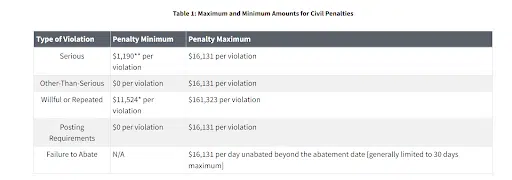
OSHA penalties in 2024 rose 3.2% through an annual cost-of-living adjustment, with the maximum penalty for serious violations reaching $16,131 and for willful violations reaching $161,323 per violation, according to OSHA’s January 2024 civil penalty adjustment notice.
The oil and gas sector operates under OSHA Process Safety Management requirements, DOT hazmat regulations, EPA environmental standards, and API guidelines simultaneously. Organizations managing safety reactively face compounding exposure across all of these frameworks when a serious incident triggers multi-agency scrutiny.
2. Operational Continuity
Unplanned downtime can cost most oil and gas companies millions annually. Incidents that trigger OSHA investigations, facility shutdowns, or emergency response protocols result in downtime that far exceeds the direct cost of the safety event itself.
3. Reputation and License to Operate
Failure to comply with safety regulations carries legal penalties, lawsuits, and loss of operational licenses. For operators in jurisdictions with strict environmental oversight, a major incident can affect operating permits across an entire asset portfolio, including the facility where the event occurred.
4. Insurance and Risk Financing
Safety performance directly affects insurance renewal terms, premium rates, and the availability of coverage for high-risk assets. Organizations that demonstrate measurable improvements in incident rates and documentation quality negotiate from a stronger position than those presenting reactive safety records.
Predictive safety systems strengthen all four dimensions by moving risk visibility upstream. When hazards are identified and addressed before they produce incidents, the regulatory event, the operational disruption, the reputational exposure, and the insurance consequence are all avoided simultaneously.
How Safer Operations Translate Into Financial Stability
The financial case for AI in oil and gas safety 1follows from the operational and workforce case. That said, the outcomes are substantial and increasingly well-documented at the operator level.
AI-powered maintenance programs across the sector have demonstrated a clear reduction in downtime by 15% and a productivity increase of 20%. (ResearchGate)
| Financial Exposure | Reactive Safety Impact | Predictive Safety Outcome |
|---|---|---|
| Unplanned downtime | Incidents trigger stoppages averaging millions annually in lost production | Earlier hazard detection reduces unplanned operational interruptions |
| OSHA penalty exposure | Manual documentation gaps increase citation risk across multi-agency frameworks | Automated compliance tracking reduces violation frequency and audit exposure |
| Workers’ compensation | Incident-driven claims raise premiums and affect risk financing terms | Lower incident rates improve insurance positioning at renewal |
| Equipment replacement | Undetected degradation leads to catastrophic failure and emergency repair costs | Predictive maintenance extends asset life and schedules repairs proactively |
| Environmental liability | Undetected leaks or spills trigger EPA enforcement, remediation costs, and reputational damage | Continuous monitoring enables early intervention before regulatory thresholds are breached |
Is Your Organization Ready for AI-Driven Safety?
Readiness for predictive safety depends on data infrastructure quality, leadership alignment across safety and operations functions, and the maturity of current monitoring systems across assets.
Also Read: AI Readiness Checklist: Simple 9-Step Guide (2025)
Signs of a Reactive Safety Environment
- Safety data is captured separately across assets, facilities, and business units with no unified analytical layer.
- Real-time monitoring is limited to process control systems, with safety monitoring handled through scheduled inspections.
- Incident reporting is manual and often completed after shifts rather than at the point of observation.
- Safety metrics and operational KPIs are reviewed in separate forums with limited cross-functional alignment.
- No formal connection between safety performance data and insurance renewal strategy or risk financing decisions.
Indicators of Readiness for Predictive Adoption
- Digital monitoring systems deployed across key assets with sensor data flowing into centralized infrastructure.
- Incident and near-miss data captured digitally in real time and stored in a unified, queryable system.
- Safety leadership has visibility across the asset portfolio
- Operations and safety teams review shared dashboards and leading indicators alongside lagging metrics.
- Organizational commitment to data-driven decision-making with cross-functional safety governance in place.
Readiness Checklist
| Readiness Factor | In Place | Partial | Not Yet |
|---|---|---|---|
| Sensor data from key assets flows into a centralized system | □ | □ | □ |
| Digital safety reporting in use across all major facilities | □ | □ | □ |
| Near-miss and hazard observation data captured in real time | □ | □ | □ |
| Safety metrics reviewed alongside operational KPIs | □ | □ | □ |
| 12+ months of clean, consistent incident and maintenance history available | □ | □ | □ |
| The safety team has cross-asset visibility through live dashboards | □ | □ | □ |
| Safety performance formally connected to insurance and risk strategy | □ | □ | □ |
Organizations that have most factors in place are positioned to move directly into platform evaluation and implementation planning. Those identifying several gaps will generate stronger outcomes by addressing data infrastructure and reporting consistency first.
Case Insight: How Field1st Supports Predictive Safety in Oil and Gas Operations
The challenge of applying predictive safety technology in oil and gas is both analytical and operational. Data pipelines produce reliable outputs only when field teams consistently capture inputs. In environments where reporting friction is high, that consistency rarely materializes through traditional tools.
Field1st addresses this directly. The platform is built around the premise that predictive safety depends on data quality, and data quality depends on adoption. When reporting takes seconds, forms adapt to field conditions, and observations are captured at the point of risk, the underlying data layer becomes reliable enough to support prediction.
Voice-enabled field reporting removes the primary barrier to real-time data capture in high-activity environments. Workers log observations, inspections, and job hazard analyses using voice input. The result is more complete data, captured closer to the moment of risk.
AI-powered hazard detection analyzes submitted photos and field observations to flag potential risks and suggest corrective controls before they escalate. The system identifies patterns across submissions, surfacing anomalies that would remain invisible in site-level review.
Predictive analytics and the AI Safety Agent connect field data, compliance insights, and cross-asset performance into a live operational view. Safety managers gain visibility into leading indicators rather than relying on lagging metrics to understand where the next risk concentration is likely to emerge.
Also Read: Predictive analytics in supply chain: What, why, benefits, use cases
For oil and gas organizations managing safety across distributed operations, Field1st provides the unified data layer that predictive models require. Leaders gain cross-asset visibility. Supervisors act on real-time alerts. Safety insights reach decision-makers at the speed required by active operations.
Turning AI Safety Strategy Into Operational Intelligence
Platform selection is one decision in a longer sequence of decisions. Organizations that treat it as the primary decision frequently find themselves with capable software operating on top of fragmented, inconsistent data, and predictive outputs that cannot be trusted enough to drive operational action.
Successful adoption of AI in oil and gas safety depends on three foundations working together before and during deployment.
Data Engineering Infrastructure
Predictive models are only as reliable as the data they are trained on. Oil and gas organizations with sensor data distributed across disconnected asset management systems, safety databases, and maintenance platforms need unified data pipelines before AI can identify meaningful patterns across those sources.
This means designing clean ETL processes from monitoring systems into centralized storage, standardizing how incidents, anomalies, and near-misses are categorized across assets and facilities, and ensuring historical data is structured for model training.
RTS Labs builds this infrastructure as a foundational layer, the engineering work that determines whether AI outputs are actionable or unreliable.
AI Models Calibrated to Operational Risk Profiles
Generic safety models produce generic outputs. Oil and gas environments carry specific risk concentrations, such as H2S exposure in upstream drilling, pressure anomalies in midstream pipeline operations, and catalyst and heat exchanger risks in downstream refining, that require models trained on operationally relevant data and calibrated to the variables that actually predict incidents in those environments.
RTS Labs’ AI consulting practice focuses on defining business and safety outcomes first, then configuring or building models to the specific risk profile of the organization’s asset types, operational conditions, and historical incident patterns.
Integration Across Existing Operational Platforms
Safety intelligence does not operate in isolation in the oil and gas industry. SCADA systems, asset management platforms, maintenance scheduling tools, and ERP environments all generate data that, when connected, improves prediction accuracy.
RTS Labs designs integration architecture that connects safety-monitoring platforms to the operational systems that field teams and operations leadership already use.
The Future of Safety Leadership in Oil and Gas
According to DNV’s Transforming Through Uncertainty report (2024), only 15% of oil and gas professionals say their organizations are using AI in live, day-to-day operations. Nearly half report their AI use is still in planning or piloting stages.
The organizations that move from pilot to production in predictive safety will carry compounding advantages of a clean data infrastructure that also supports operational optimization, maintenance scheduling, and regulatory compliance documentation.
The global AI market in oil and gas was valued at approximately USD 2.5 billion in 2024 and is projected to grow at 7.1% annually through 2034, according to Blackridge Research. That investment trajectory reflects an industry moving toward AI adoption at scale.
Regulatory pressure will reinforce this direction. OSHA’s evolving electronic reporting requirements signal a longer-term shift toward real-time data accountability. Organizations with a unified, continuously updated safety data infrastructure will meet those requirements with lower administrative overhead and stronger audit defensibility than those still reconstructing compliance records from manual documentation.
For oil and gas leadership, the question is not whether predictive safety will define the next decade of risk management in this industry. The question is how much of the performance gap the organization is willing to accept before committing to the transition.
Frequently Asked Questions
1. How Is AI Currently Used to Improve Safety in Oil and Gas Operations?
AI monitors equipment health, worker behavior, and atmospheric conditions in real time, catching failures, PPE violations, and hazardous exposure before they escalate.
2. What Types of Operational Data Are Most Useful for Predictive Safety Systems?
Equipment sensor readings, incident logs, near-miss reports, and maintenance history. Consistency matters more than volume; clean, standardized data produces more reliable predictions than larger, fragmented datasets.
3. Can AI Safety Systems Integrate With Existing Industrial Monitoring Platforms?
Enterprise AI safety platforms integrate with SCADA systems, ERP environments, and asset management tools via APIs, middleware, and custom connectors, without replacing existing infrastructure.
4. How Long Does It Take to Implement AI-Driven Safety Systems in Oil and Gas?
Eight to twelve weeks for organizations with clean data and centralized monitoring. RTS Labs follows a 90-day path from use-case definition to initial production deployment.
5. What Internal Teams Should Be Involved When Evaluating AI Safety Technologies?
Safety and HSE, operations, IT and data engineering, and finance and risk management. All four consistently produce underperforming deployments from the start, excluding any of them.