
AI Consulting for Logistics
AI in Logistics, Built Into the TMS You Already Run.
Landstar cut agent search time by 90%. A top-50 freight broker cut match confirmation from 47 minutes to under 4. We pick the dispatch, quoting, exception or billing workflow costing you the most, build it into your stack, and measure loads per rep and margin after go-live.
For freight brokers, 3PLs and carriers · Since 2010 · 100+ people in the US · SOC 2 Type II
Strategy
Production
Source Systems
Core · warehouse · docs · email
Siloed
Extraction & RAG
Documents → structured, searchable data
Models & guardrails
Scoring · evaluation · monitoring
In production
Integrated · audited · owned by your team
Live
Logistics Teams We've Built For




Freight or fleet workflow eating hours?
Why It Matters
Less Time Hunting for Status. More Loads per Person.
Dispatchers, customer service reps and carrier reps spend hours pulling status, rates and documents out of five systems before they can act. AI does the assembly and links every fact to its source. Your people make the call.
Where Most Teams Are Stuck
Pilots built on exported CSVs that break on your live TMS, WMS and EDI
Carrier names, location codes and accessorials that don’t match across systems
AI that sits beside the workflow, so reps never use it
No approvals or audit logs, so ops won’t let software act
Where RTS Labs Takes You
One workflow live inside your TMS, WMS or EDI
Data checked before we build, so the first release works on live loads
Approvals and audit logs, so ops can let it act
Measured in loads per rep, margin per load and detention billed
Sound Familiar?
The Problems We're
Called In to Solve.
If one of these sounds like your team, it’s a good place to start.
“We chase status across email, calls and portals.”
Finding out where a load is has become a full-time job.
“The TMS has the data. People still re-key it.”
Re-keying, copy-pasting and reconciling between systems that don’t talk eats the day.
“Exceptions show up after the detention clock starts.”
By the time a delay surfaces, detention is running and the customer is already calling.
“We find margin leaks after the load closes.”
Accessorials the carrier billed you never get billed to the shipper, and you find out after the money’s gone.
“Carrier fraud keeps getting harder to spot.”
Fake carriers and double brokering look legitimate until a load goes missing or the payment goes to the wrong party.
“Another tool nobody adopts.”
The AI demo looked great until it hit the real workflow, and the team went back to the old screen.
Recognize two or more?
Start with the one that costs most.
Thirty minutes with a senior engineer. You’ll get a first read on which workflow pays back fastest.
Proof
What It Looks Like When It Ships.
Two logistics builds in production, both with published case studies.
Agent Portal Copilot · Landstar
90% Less Time Searching for Landstar Agents
Landstar’s independent agents checked five to seven systems for a single lookup, averaging 12 to 15 minutes each. We built an AI copilot inside the Agent Portal that answers in one place. It connects three core systems, shipment, capacity and internal documentation, and runs inside Landstar’s private Azure network.
Freight Matching · Top-50 U.S. Freight Broker
Carrier Match Confirmed in Under 4 Minutes, Down From 47
A top-50 broker matched loads by hand across 1,200+ carrier relationships, and the carriers it matched ran 34% empty miles against a 22% industry benchmark. We built a matching engine on 18 months of load and carrier history plus live lane pricing. Reps get ranked carrier matches and rate guidance inside their existing TMS.
“They shifted our dispatchers from being operational bottlenecks to exception handlers.”
VP of Operations, top-50 U.S. freight brokerage
More From Logistics
Invoice Processing · Bennett International Group
95% of invoice extraction automated and a 70% faster processing cycle. The finance team reviews exceptions instead of keying data.
Field Service Dispatch · Carter Machinery (Caterpillar dealer)
One dispatch system for dispatchers, drivers and customers, built on live GPS data. Routing efficiency up 30%.
Trailer Recovery · Summit Management Group
GPS and shipment data checked automatically, so high-risk trailers surface days earlier.
SOP Summary Agent · Anderson Trucking Service
An agent that turns long standard operating procedures into answers staff can use on the spot.
Want this on your own workflow?
Start with a 30-minute call.
A senior engineer on the dispatch, quoting, exception or billing workflow costing you the most.
Where We Apply It
Where We'd Start in Your Operation.
Specific freight and fleet workflows, each one built into the systems you already run. Filter by the part of the business you want to move.
Dispatch & Service
Email Quote & Tender Intake
Pain
Quote requests and load tenders arrive by email and get re-keyed into the TMS.
We Build
Reads quote requests into a draft quote and tenders into a draft TMS load, flags missing details, and routes acceptance to your team.
Impact
Faster response to shippers and fewer keying errors.
For: Sales · Customer Service
Dispatch & Service
Carrier Rep & Dispatch Copilot
Pain
Reps assemble load context from several systems before they can act.
We Build
Load context, risk flags and a drafted next action inside the rep’s existing TMS screen.
Impact
More loads per rep, and faster calls on the loads at risk.
For: VP of Operations
Dispatch & Service
Customer Service Copilot
Pain
Reps spend hours assembling status your systems already know.
We Build
Answers “where’s my shipment?” with live status and drafted replies.
Impact
Faster answers and fewer escalations.
For: Head of Customer Service
Agentic Automation
Exception Management Agent
Pain
Delays and dwell eat hours of back-and-forth.
We Build
Detects delays and dwell, gathers context and routes a recommended fix for approval.
Impact
Exceptions caught early, with a person approving every action.
For: Operations
Agentic Automation
Shipment Status Agent
Pain
Customers ask for status before your team can send it.
We Build
Watches tracking signals and sends status updates, by email or EDI 214, before the customer asks.
Impact
Fewer status calls and better shipper scorecards.
For: Customer Service
Agentic Automation
Rate Quote Agent
Pain
Spot quotes are assembled by hand from rate data and lane history.
We Build
Assembles spot quotes from rate data and lane history for a rep to send.
Impact
Quotes out in minutes, while the shipper is still waiting.
For: Pricing · Sales
Carriers & Billing
Carrier Vetting & Fraud Checks
Pain
Double brokering and fake carrier identities slip through manual checks.
We Build
Checks carrier identity, authority, insurance and contact changes before the load is booked, and cross-checks pickup driver and equipment details against the carrier’s dispatch confirmation.
Impact
Fewer stolen loads and bad tenders, with a reason logged for every flag.
For: Carrier Relations · Compliance
Carriers & Billing
Freight Invoice Audit
Pain
Carrier invoices are matched to rate confirmations and accessorials by hand.
We Build
Extracts your carriers’ invoice formats, matches charges to rate confirmations and approved accessorials, and routes discrepancies, missing documents and low-confidence matches for review.
Impact
Overbilling caught before payment, and fewer AP hours.
For: Finance · Freight Audit
Carriers & Billing
Detention & Accessorial Capture
Pain
You pay the carrier’s detention but can’t bill the shipper, because notice didn’t go out inside the contract window.
We Build
Pulls arrival and departure times from your tracking provider, BOL in and out times and appointment records, checks customer free time and terms, and flags the shipper notice deadline while the truck is still waiting.
Impact
More eligible detention billed under your customer terms, with the evidence attached.
For: Billing · Operations
Carriers & Billing
Carrier Settlement & Factoring Checks
Pain
Paying the carrier when the invoice was assigned to a factor means paying twice.
We Build
Settlement checks that confirm the payee, the notice of assignment (NOA) on file and remit-to details before payment.
Impact
Fewer duplicate payments and disputes.
For: AP · Carrier Settlement
Carriers & Billing
Cargo Claims & OS&D
Pain
Overage, shortage and damage claims sit in email, with photos and BOLs scattered.
We Build
Assembles the claim file from BOLs, PODs, photos and emails and drafts the claim for review.
Impact
Faster claim resolution and fewer write-offs.
For: Claims · Customer Service
Planning & Prediction
ETA & Delay-Risk Prediction
Pain
You learn a load is late when the customer calls.
We Build
Scores each load’s risk of running late so teams act on the ones that matter first.
Impact
Earlier intervention and fewer surprise costs.
For: Operations
Planning & Prediction
Route Optimization
Pain
Routes are planned on yesterday’s assumptions, then reworked by hand all morning.
We Build
Sequences stops against live traffic, telematics and your real constraints: time windows, capacity and driver hours.
Impact
Carter saw a 30% improvement in routing efficiency after go-live.
For: Fleet · Operations
Planning & Prediction
Demand & Capacity Forecasting
Pain
Capacity and staffing get planned off last year’s spreadsheet.
We Build
Forecasts volume by lane, customer and facility at the horizon your planners commit to.
Impact
Right-sized capacity and labor, with fewer scrambles.
For: Planning · Network
Dispatch & Service
Email Quote & Tender Intake
Pain
Quote requests and load tenders arrive by email and get re-keyed into the TMS.
We Build
Reads quote requests into a draft quote and tenders into a draft TMS load, flags missing details, and routes acceptance to your team.
Impact
Faster response to shippers and fewer keying errors.
For: Sales · Customer Service
Dispatch & Service
Carrier Rep & Dispatch Copilot
Pain
Reps assemble load context from several systems before they can act.
We Build
Load context, risk flags and a drafted next action inside the rep’s existing TMS screen.
Impact
More loads per rep, and faster calls on the loads at risk.
For: VP of Operations
Dispatch & Service
Customer Service Copilot
Pain
Reps spend hours assembling status your systems already know.
We Build
Answers “where’s my shipment?” with live status and drafted replies.
Impact
Faster answers and fewer escalations.
For: Head of Customer Service
Agentic Automation
Exception Management Agent
Pain
Delays and dwell eat hours of back-and-forth.
We Build
Detects delays and dwell, gathers context and routes a recommended fix for approval.
Impact
Exceptions caught early, with a person approving every action.
For: Operations
Agentic Automation
Shipment Status Agent
Pain
Customers ask for status before your team can send it.
We Build
Watches tracking signals and sends status updates, by email or EDI 214, before the customer asks.
Impact
Fewer status calls and better shipper scorecards.
For: Customer Service
Agentic Automation
Rate Quote Agent
Pain
Spot quotes are assembled by hand from rate data and lane history.
We Build
Assembles spot quotes from rate data and lane history for a rep to send.
Impact
Quotes out in minutes, while the shipper is still waiting.
For: Pricing · Sales
Carriers & Billing
Carrier Vetting & Fraud Checks
Pain
Double brokering and fake carrier identities slip through manual checks.
We Build
Checks carrier identity, authority, insurance and contact changes before the load is booked, and cross-checks pickup driver and equipment details against the carrier’s dispatch confirmation.
Impact
Fewer stolen loads and bad tenders, with a reason logged for every flag.
For: Carrier Relations · Compliance
Carriers & Billing
Freight Invoice Audit
Pain
Carrier invoices are matched to rate confirmations and accessorials by hand.
We Build
Extracts your carriers’ invoice formats, matches charges to rate confirmations and approved accessorials, and routes discrepancies, missing documents and low-confidence matches for review.
Impact
Overbilling caught before payment, and fewer AP hours.
For: Finance · Freight Audit
Carriers & Billing
Detention & Accessorial Capture
Pain
You pay the carrier’s detention but can’t bill the shipper, because notice didn’t go out inside the contract window.
We Build
Pulls arrival and departure times from your tracking provider, BOL in and out times and appointment records, checks customer free time and terms, and flags the shipper notice deadline while the truck is still waiting.
Impact
More eligible detention billed under your customer terms, with the evidence attached.
For: Billing · Operations
Carriers & Billing
Carrier Settlement & Factoring Checks
Pain
Paying the carrier when the invoice was assigned to a factor means paying twice.
We Build
Settlement checks that confirm the payee, the notice of assignment (NOA) on file and remit-to details before payment.
Impact
Fewer duplicate payments and disputes.
For: AP · Carrier Settlement
Carriers & Billing
Cargo Claims & OS&D
Pain
Overage, shortage and damage claims sit in email, with photos and BOLs scattered.
We Build
Assembles the claim file from BOLs, PODs, photos and emails and drafts the claim for review.
Impact
Faster claim resolution and fewer write-offs.
For: Claims · Customer Service
Planning & Prediction
ETA & Delay-Risk Prediction
Pain
You learn a load is late when the customer calls.
We Build
Scores each load’s risk of running late so teams act on the ones that matter first.
Impact
Earlier intervention and fewer surprise costs.
For: Operations
Planning & Prediction
Route Optimization
Pain
Routes are planned on yesterday’s assumptions, then reworked by hand all morning.
We Build
Sequences stops against live traffic, telematics and your real constraints: time windows, capacity and driver hours.
Impact
Carter saw a 30% improvement in routing efficiency after go-live.
For: Fleet · Operations
Planning & Prediction
Demand & Capacity Forecasting
Pain
Capacity and staffing get planned off last year’s spreadsheet.
We Build
Forecasts volume by lane, customer and facility at the horizon your planners commit to.
Impact
Right-sized capacity and labor, with fewer scrambles.
For: Planning · Network
Not sure which of these fits your operation?
Start with a 30-minute call to narrow the options. If there’s a fit, a fixed-fee Discovery Sprint confirms the workflow, the data and the build scope.
How We Partner
From Your Highest-Cost Workflow to a Production System.
A fixed-fee Discovery Sprint first, then fixed-price builds. You know the cost and the go/no-go before the real spend starts.

1
Find the Workflow With the Most Pain
A two-week Discovery Sprint. We find where manual work, delays, rework and margin leakage show up, and pick the one with the clearest payback.
Clarity on where AI pays first
2
Validate the Data and Systems
We review your TMS, EDI, tracking, load board, accounting and document flows to confirm what’s feasible before we build.
Go/no-go before real money
3
Build Phase 1 Into Production
We build, integrate, test and deploy one focused workflow inside the screens your team already uses, with the right controls.
Live in weeks
4
Measure, Improve and Scale
We track loads per rep, margin per load, detention billed and on-time rate. The numbers that prove phase 1 scope phase 2.
Phase 1 scopes phase 2
Why RTS Labs
The Team That Recommends It Is the Team That Builds It.
How we compare with the options you’re probably weighing: big consulting firms, offshore dev shops and AI prototype vendors.

Big Consulting Firms
Offshore Dev Shops
AI Prototype Vendors
Ships Production Systems
Senior Engineers on Your Account
Owns Data, Security and Governance
Phase 1 Live in Weeks
Stays After Launch
See It in Action
AI’s Role in Transforming Supply Chains.
Jyot Singh, RTS Labs’ founder and CEO, on Ticker News: how AI is changing last-mile delivery, and how generative AI improves demand forecasting.
Why Logistics Leaders Trust Us to Build
A Delivery Team Ops Can Rely On.
The facts a vendor review asks for, and the controls ops leaders ask about.
Building Since 2010
We’ve shipped production software since 2010. Our AI work runs on the same delivery habits.
200,000+ Hours of AI Work
Delivered for clients in logistics, insurance, financial services, real estate and more.
100+ People, All in the US
The engineers on your project are RTS employees based in the US.
SOC 2 Type II
SOC 2 Type II attestation held by Rising Tides Solutions, LLC, the company behind RTS Labs. Report available under NDA.
Anthropic Claude Partner
RTS Labs is a member of Anthropic’s Claude Partner Network.
Runs Inside Your Network
We’ve deployed inside a client’s private Azure network, behind their firewall.
You Own What We Build
The custom code and infrastructure we build transfer to you at handoff, in your repositories.
A Person Approves the Big Moves
Anything that commits money or changes a booking waits for a person. Routine status updates go out on rules you set.
Tested on Your Own Loads
We measure accuracy on your real loads and documents before launch, and keep measuring in production.
Who You'll Work With
Meet the Delivery Team.
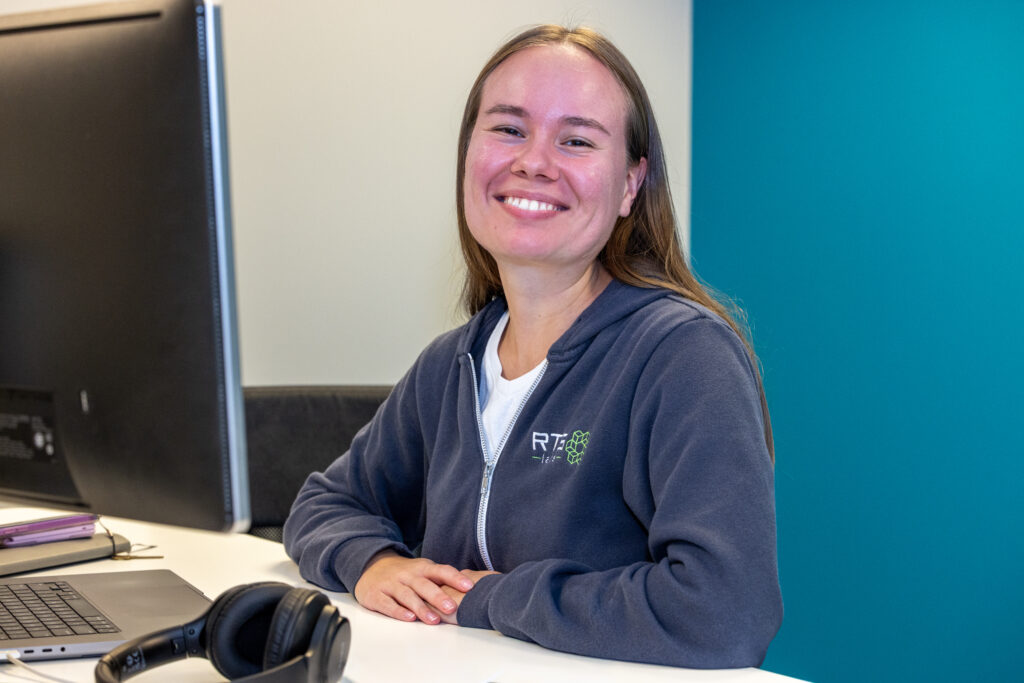
Everyone on your project is an RTS employee based in the US, and the engineers who scope the work are the ones who build it. Our home base is Glen Allen, Virginia, just outside Richmond.





Nathan Clarke
Director of Client Delivery

Chris Deiter
Team Lead, Software Engineer

Jerry Pauly
Team Lead, Software Engineer
Our Clients' Words
Testimonials

Summit Management Group, Inc
- Spencer Gray | Recovery/Legal Manager
Questions, Answered Straight
Before You Talk to Us.
What is AI consulting for logistics?
It’s help choosing, building and running AI inside a freight broker, 3PL, carrier or shipper. A good partner finds the dispatch, quoting, exception or billing workflow where AI pays back, checks that the data supports it, builds it into your TMS and other systems, and measures the result. At RTS Labs, one senior team takes it from the first call to production.
How is AI used in logistics and supply chain today?
Mostly to take status hunting, re-keying and document work off skilled people. Common uses include dispatcher and customer service copilots, freight matching and spot quotes, exception and delay alerts, carrier vetting, freight invoice audit, detention and accessorial billing, route optimization and demand forecasting. Generative AI reads documents and drafts replies. Predictive models score risk and forecast volume. Agents chase updates and route work, with people approving financial commitments and booking changes, while routine customer updates follow rules you approve.
Which logistics workflows pay back fastest?
High-volume, repetitive workflows with accessible data and a clear cost, such as rep copilots, email tender intake, exception alerts, status updates and freight matching. We compare time spent, exception rates and integration effort during discovery. A top-50 freight broker cut match confirmation from 47 minutes to under 4 and grew revenue 18%. Landstar cut agent search time by 90%.
Does it integrate with our TMS, WMS, ERP and EDI?
Yes. We connect to TMS, WMS, ERP, CRM, EDI, telematics, email and documents using whatever each system supports: APIs, database connections, EDI feeds or scheduled file feeds. We check every data flow during discovery, before you commit to a build. The freight matching engine on this page delivers its results inside the broker’s existing TMS.
Is our operational data clean enough for AI?
You don’t need perfect data to start. You need access to the right data. Carrier names, location codes and accessorial terms rarely match across systems, so we check quality during discovery and fix the foundation as part of the work. Our data engineering team handles that before the model work starts.
How long does it take, and how is it priced?
Every engagement starts with a fixed-fee, two-week Discovery Sprint, so you know the scope and price before you commit to a build. Builds are then priced as fixed-scope projects with milestones. Most first builds go live in 6 to 16 weeks, depending on data and integrations. The freight matching engine on this page went live in 10 weeks.
Can AI help with carrier fraud and double brokering?
Yes. AI checks a carrier’s identity, operating authority, insurance and recent contact or payment changes before the load is booked, and cross-checks pickup driver and equipment details against the carrier’s dispatch confirmation. Your carrier team makes the final call, and every flag records why it fired. It works alongside vetting tools like Highway, Carrier Assure, RMIS or MyCarrierPackets.
Can AI automate freight invoice audit and accessorial billing?
Yes. AI extracts data from your carriers’ invoice formats, matches charges to rate confirmations and approved accessorials, and routes discrepancies, missing documents and low-confidence matches to a person. On the billing side, it pulls tracking arrival and departure times, BOL in and out times and appointment records together, and checks your customer terms and notice deadline, so eligible detention gets billed with evidence. Bennett automated 95% of its invoice extraction and cut its processing cycle by 70%.
Is agentic AI safe for logistics operations?
Yes, when it’s controlled. An agent gets a clear job, access only to approved systems, defined permissions and rules for when to act, ask or escalate. Anything that commits money or changes a booking goes through a person, routine updates follow rules you set, and everything is logged. The full set of controls is on our AI agent governance page.
Does it work for freight brokers, 3PLs and asset-based carriers?
Yes, and the best first project differs by model. Brokers usually start with email tender intake, freight matching, spot quotes, carrier vetting and EDI 214 status automation, using data from their tracking provider. 3PLs start with exceptions, warehouse-to-transport handoffs and client reporting. Asset-based carriers start with dispatch, routing, ETA prediction and driver communication, using their own telematics. Discovery confirms which fits your operation.
Can you build route optimization and demand forecasting models?
Yes. Route optimization needs GPS or telematics history, stop-level delivery records and your real constraints: time windows, capacity and driver hours. Demand forecasting needs order and lane history with enough seasonality to learn from. We usually put one model into production and measure it before starting the second. Carter improved routing efficiency by 30% after go-live.
Who owns the code and the data?
You own the custom code and infrastructure we build, in your repositories and your cloud account. During discovery we agree with you which model services, if any, can see your data. Third-party models stay under their providers’ terms. At handoff you get documentation and training, and you’re never locked in to us to keep it running.
What happens after launch?
After launch, you decide who runs it. Some clients run the system themselves. Others keep us on a monthly support retainer or add an embedded AI team to build the next workflow. Running costs are mostly cloud and model usage in your own account, and we size them with you during the build.
Should we build custom AI or buy off-the-shelf logistics software?
Buy when an existing product handles the workflow and fits your systems at a lower total cost. Build when a high-value workflow isn’t covered, or needs logic across several systems that no product provides. Most brokers keep their load boards, tracking and vetting tools, and we build the layer that brings their data into one workflow inside the TMS.
How is RTS Labs different from a big consulting firm or an offshore shop?
The senior engineers who scope your project build it, connect it to your production systems with controls and monitoring, and stay through launch and after. Everyone on the work is an RTS employee based in the US. We’ve built production software since 2010 and delivered more than 200,000 hours of AI work.
Let's Talk
Bring Us Your Toughest Logistics Workflow.
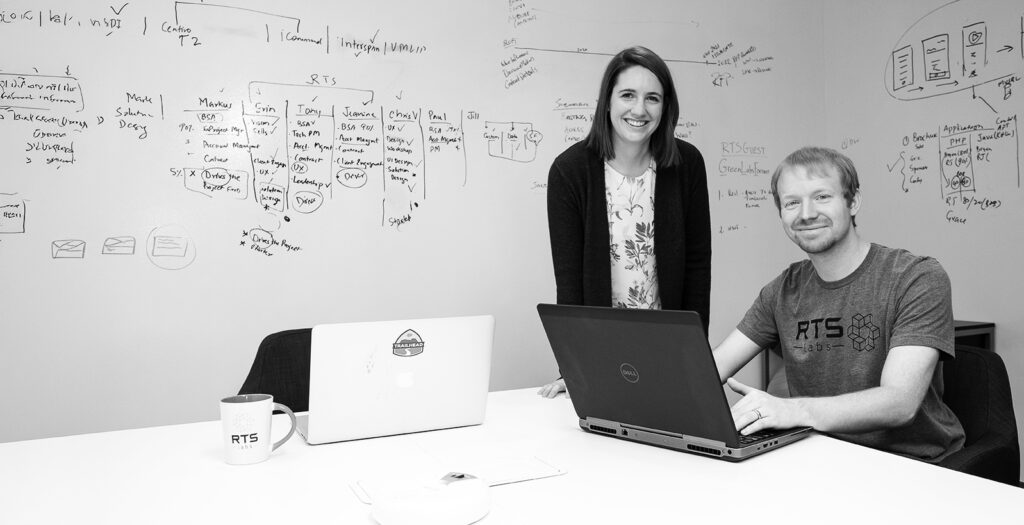
Thirty minutes with a senior engineer. Bring one workflow and tell us where it gets stuck. You’ll leave with a first read on feasibility and a rough effort range.
- A senior engineer on the call
- A read on feasibility, data and effort
- Which workflow to start with, and why