10 Challenges
Let’s start with ten key challenges that logistics and supply chain managers face daily in managing last-mile logistics—whether that last mile is urban, suburban, or rural.
1. Traffic congestion: Urban areas are notorious for heavy traffic, which leads to delays, increased fuel consumption, and higher operational costs. This congestion complicates scheduling and makes it difficult to guarantee timely deliveries.
2. Less-than-truckload route and load planning: It can be challenging to maximize the capacity of small delivery vehicles while also ensuring timely deliveries. Dealing with smaller, fragmented shipments requires efficient load planning to minimize the number of trips and reduce costs.
3. Carrier selection: For shippers, choosing the right carriers involves balancing cost, reliability, and capacity constraints. Fluctuating demand and varying service levels among carriers make this selection process challenging.
4. Intense competition: For last-mile transportation providers, competition in the urban logistics market is fierce. There is a lot of pressure for providers to operate more efficiently and offer superior service. Staying ahead requires continuous improvement and innovation.
5. Carrier availability: Limited carrier capacity, especially during peak periods, can lead to delays and unmet customer expectations. Securing adequate and reliable carrier services is a constant concern.
6. Regulatory restrictions: Urban regulations may impose limits on delivery times, vehicle sizes, emissions, and access to certain areas. Compliance with these rules adds complexity to logistics planning.
7. Infrastructure limitations: Challenges such as narrow streets, limited parking, and loading-zone restrictions make urban deliveries time-consuming and difficult to execute efficiently.
8. Evolving customer expectations: Consumers increasingly expect faster, more flexible delivery options, including same-day or time-specific deliveries.
9. Sustainability concerns: There is growing pressure to reduce the environmental impact of last-mile deliveries, including emissions and noise pollution. As a result, logisticians increasingly must consider greener practices when planning delivery routes, networks, and assets.
10. Technology integration and data management: Integrating data from warehouse management systems (WMS), transportation management systems (TMS), order management systems (OMS), and customer relationship management (CRM) systems is complex but essential for efficient operations and real-time decision-making.
10 Applications
1. Route optimization: Machine learning models can be used with route optimization software to predict traffic patterns based on historical data, improving route scheduling and planning. Additionally, AI-enabled dynamic routing algorithms can be used with route optimization software to analyze real-time data on traffic, weather, and road conditions. This real-time analysis allows for on-the-fly route adjustments, helping to optimize delivery routes and reduce delays caused by congestion.
2. Demand forecasting: Al-powered predictive analytics can work in tandem with demand forecasting solutions to analyze historical sales data, seasonal trends, and external factors. This analysis creates more accurate and reliable demand forecasts. These improved forecasts can, in turn, help to better allocate resources, such as trucks and drivers.
Additionally, shippers can leverage these forecasts to improve their inventory management processes, helping them maintain adequate stock levels at distribution centers near urban areas. This improved inventory management ultimately contributes to reduced delivery times.
3. Vehicle load optimization: Machine learning algorithms can be used with load planning and optimization software to determine the most efficient way to load vehicles, considering package dimensions and delivery sequences. The software may also use AI to fine-tune loading plans in real time based on last-minute order changes or cancellations.
4. Delivery time prediction: AI models can provide more refined estimated time of arrivals (ETAs) by considering various factors such as traffic conditions, weather conditions, driver behavior, route complexity, vehicle type, time of day and day of week, and warehouse delays. AI agents may, in turn, send live updates to customers about their delivery status, providing them with real-time awareness of their shipments. By providing more precise delivery information and more proactive communication, AI can help companies improve customer satisfaction levels.
5. Autonomous delivery vehicles, drones, and robots: Self-driving vehicles, which utilize AI, may well be entering into supply chains in the near term. Autonomous vans and trucks could operate during off-peak hours, increasing efficiency and reducing labor costs. Additionally, AI-powered drones and ground robots could perform deliveries in congested areas, bypassing traditional traffic issues.
6. Driver assignments: AI can augment logistics or fleet management software to better match delivery tasks with the best-suited drivers based on location, expertise, and workload.
7. Carrier selection: AI-enabled performance analytics can assist transportation management software to evaluate carriers based on cost, reliability, and capacity. Machine learning can also be used to build flexible carrier networks that can scale with demand and collaborate with TMS, multi-carrier shipping platforms, and freight marketplaces.
8. Personalized delivery options: Last-mile delivery platforms can use AI to analyze customer behavior data and purchase history and recommend delivery windows and methods that are tailored to meet specific customer profiles. Machine learning can then analyze customer feedback—such as reviews, survey responses, live chat/support tickets, and call center transcripts—to identify how to improve the delivery options recommended by route optimization software and transportation management software.
9. Emission reduction: Route optimization software or transportation management systems could use AI to design routes to minimize fuel consumption and carbon emissions. If the delivery fleet includes electric vehicles, the software could use machine learning to plan routes suitable for electric vehicles that take into account charging station locations.
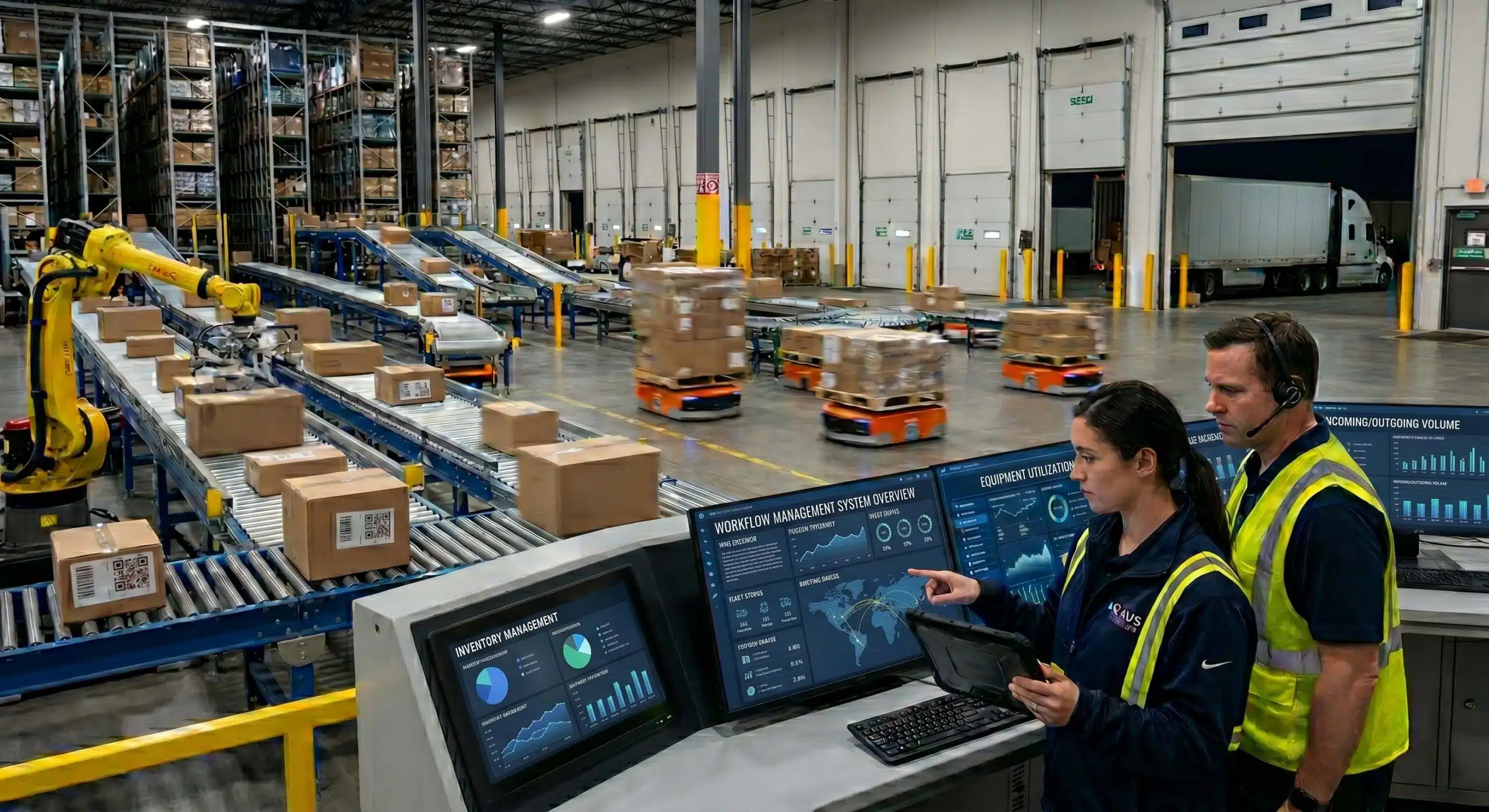
10. Warehouse automation: AI-driven robots can be used to sort packages more efficiently, which would speed up order fulfillment and allow companies to make last-mile deliveries faster. Machine learning can also be incorporated into inventory management software to better monitor stock levels and automate reordering processes. This would reduce the chance that deliveries would be delayed due to stockouts.
10 steps for AI implementation
AI and ML can be quite effective in responding to the challenges of last-mile logistics, but to get the most out the technology, it is essential to have a comprehensive implementation roadmap. Here are some key steps:
1. Engage key stakeholders: Organize meetings with external and internal partners, including operations, IT/data engineering, customer service, finance, and any other members of the expanded logistics team. The goal of these meetings is to understand the specific challenges that you and your partners are facing in regard to last-mile logistics and what your objectives are. Identify pain points by examining documented issues, such as delivery delays, high costs, inefficiencies, and customer complaints. Then set clear objectives that help define what you aim to achieve with AI. (For example: Reduce delivery times by 20%, improve route efficiency, and enhance customer satisfaction.)
2. Collect and integrate data: Audit existing data to assess the quality and availability of data from both shippers and carriers, including delivery logs, route information, and customer data. Next develop a centralized data platform, such as a data warehouse or data lake, where all relevant data can be accessed and analyzed. As the platform is developed, teams can begin integrating key data sources—such as delivery logs, route data, and customer feedback—using application programming interfaces (APIs) and ETL (extract, load, and transform) tools. This iterative process allows for quick wins while ensuring long-term scalability and alignment with business goals.
Ensure any data platform addresses privacy concerns and complies with regulations like the European Union’s General Data Protection Regulation (GDPR) or the California Consumer Privacy Act (CCPA) when handling customer data.
3. Collaborate on solution design: In this stage, shippers, carriers, and AI solution providers should work together to design AI strategies that align with real-world logistics needs. Collaborative workshops allow each group to share insights, identify pain points, and shape solutions that are both technically sound and operationally practical. These strategies might include improving delivery accuracy, optimizing dispatch, or automating manual workflows—ensuring the AI models are built with input from all key stakeholders.
4. Select the right AI tools and technology: Selecting the right AI tools starts with clearly defining the business problems you want to solve—whether it’s route optimization, demand forecasting, or loading efficiency. From there, evaluate tools based on factors like data compatibility, ease of integration with existing systems (such as your TMS and/or WMS), scalability, and whether the solution offers pre-built models or requires custom development. It’s also important to consider vendor experience in logistics, support capabilities, and the flexibility to evolve with your business. A pilot or proof of concept can help validate the tool’s effectiveness before a full rollout.
5. Start small to validate solutions: Choose a specific geographic area or type of delivery to test the AI solution. Establish metrics such as delivery time reduction, cost savings, or customer satisfaction improvements. Collect data and stakeholder input to assess the effectiveness of the AI application.
6. Develop a detailed deployment plan: Plan for a gradual implementation of AI solutions to manage risks and allow for adjustments. Assign necessary resources, including budget, personnel, and technology infrastructure. Educate employees on new systems and processes to ensure smooth adoption.
7. Integrate with existing systems for seamless operations: Create interfaces that allow the AI solutions to communicate with existing logistics and management systems. Verify that new AI tools are compatible with the hardware and software currently in use. Plan implementations to avoid significant interruptions in daily operations.
8. Refine AI solutions over time through continuous monitoring and optimization: Use dashboards and analytics to monitor the impact of AI on key metrics. Update AI algorithms based on real-world data and changing conditions. Plan for scaling the solution across more regions or services as success is demonstrated.
9. Maintain open lines of dialogue with key stakeholders: Keep all parties informed about progress, challenges, and successes. Encourage shippers and carriers to provide ongoing feedback for continuous improvement. Acknowledge achievements to maintain momentum and stakeholder buy-in.
10. Proactively manage potential obstacles: Identify potential risks, such as technical issues, resistance to change, or data security concerns. Develop plans to address these risks, such as additional training or enhanced security measures. Stay informed about laws and regulations affecting AI and logistics to ensure ongoing compliance.
Looking ahead, planning now
With the right collaboration among shippers, carriers, and AI solutions providers, the challenges of last-mile logistics can be met with smart technology tools enabled by AI and machine learning, implemented through a well-planned roadmap. Professor Byrnes may have been right that some supply chain plans are outdated. However, things are different today. A new generation of AI is now available to make last-mile logistics agile and provide shippers with a viable solution to bring goods to market more efficiently and ahead of their competitors.