
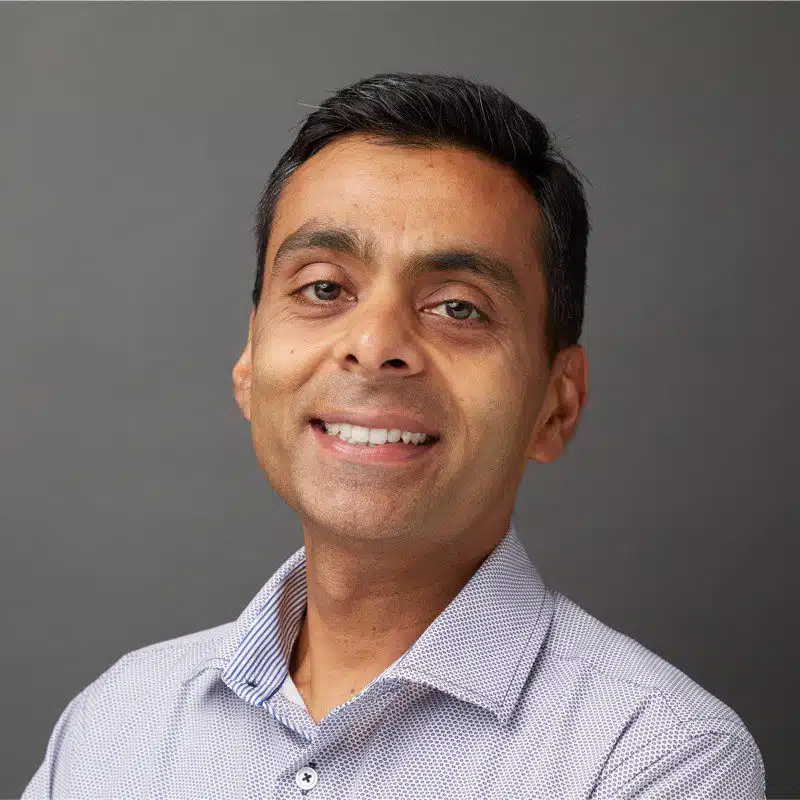
As AI technology rapidly advances, ensuring its responsible development and deployment has become more critical than ever. How are today’s AI leaders addressing safety, fairness, and accountability in AI systems? What practices are they implementing to maintain transparency and align AI with human values? To address these questions, we had the pleasure of interviewing Jyot Singh.
An entrepreneur, investor, and advisor to enterprise and mid-market businesses, Jyot Singh is the founder and CEO of RTS Labs. He’s driven by the pursuit of innovative solutions, leveraging the technology of tomorrow to address today’s business challenges. Throughout his journey as a technologist, entrepreneur, and mentor, Jyot has gleaned insights from numerous companies and industry pioneers navigating intricate tech evolutions. He is a Member, Board, and Tech Chair at Young Presidents Organization (YPO), and he previously served as a Board Member for the Virginia Council of CEOs. He started his career as a software engineer.
Thank you so much for your time! I know that you are a very busy person. Before we dive in, our readers would love to “get to know you” a bit better. Can you tell us a bit about your ‘backstory’ and how you got started?
Growing up, I was always interested in science and math. Physics was my favorite subject. I was on my way to becoming an electrical engineer, but then I met my wife, fell into computer science, and loved it. We met in college, and she was a computer science major, so I thought “maybe I should learn computer science…” It was a huge change — I had never coded or used a computer before that, but it reshaped the course of my life.
I am a technologist at heart, but I find that I thrive at the intersection of entrepreneurship and technology. The first company I started was a data analytics company back in 2007. That led to my love of data. I discovered that knowing your data is crucial to informed decisions. Data does a lot. I also learned team-building skills, which proved useful when I started RTS Labs in 2010.
15 years ago, we expanded to machine learning, the logical next step from data science. From there, we have done a lot of high-end generative AI work and generative AI projects, ranging from monitoring ocean health to implementing AI in enterprise manufacturing supply chains. Our approach, grounded in starting small, proving out, and then scaling quickly, fits really well with the way the world is going with AI. We’ve had 15 years of hard work in preparation of this generative AI breakthrough. It feels very much in line with my core philosophy.
None of us can achieve success without some help along the way. Is there a particular person who you are grateful for, who helped get you to where you are? Can you share a story?
I started my first data company with two other founders. We were successful, but we had a founder breakup (on good terms) because of family obligations, so I found myself working by myself on sales, writing code, everything. In the process, I met a guy who was the CIO of a company who didn’t like my product, but he liked me. I heard nothing, just crickets, after the initial pitch, but then three months later, he called me in the middle of the night and asked me to come work on a data science project at another startup.
It was a gamble, but I ended up staying there for three to four straight days, day and night. That company went from $0 to $400 million in two years and became a really good client. I had validated that CIO’s trust in me, and it ended up developing into a solid relationship. He became a mentor and is now one of my best friends, and the experience led to the formation of RTS Labs.
The lesson I learned from that was that there’s always a reason, and there’s always a way the dots connect. You might be angry at the time when you don’t get a call back — I certainly was — but sometimes even the worst thing can turn into the best opportunity if you’re open to it.
You are a successful business leader. Which three character traits do you think were most instrumental to your success? Can you please share a story or example for each?
- Building trust. I have worked hard to build trust with clients, friends, and my broader network. Being present — and showing up when people need you — goes a long way. People remember when you help them in a time of need. Do what you say you’re going to do. Deliver.
- Ideas are a dime a dozen. Execution is the key. Almost everyone who is successful knows how to execute. They show action. They don’t let fear and hesitation hold them back. For their successes and failures alike, they say they’re going to do something, and they do it
- Ability to adapt. The ability to fall and to get up is something that’s essential for business leaders. You might get lucky the first time, but then when the tide turns against you or you have to start over, the ability to rinse and repeat is part of being a true business leader. As the saying goes, “When you work hard, you get lucky.”
Thank you for all that. Let’s now turn to the main focus of our discussion about how AI leaders are keeping AI safe and responsible. To begin, can you list three things that most excite you about the current state of the AI industry?
- AI’s potential to help develop innovative new solutions to persistent problems. From supply chain logistics to environmental science, certain quandaries have proven difficult to resolve, in spite of countless bright people setting their minds to it. Whether because of the scale or the complexity of the issue, these problems have limited progress and caused headaches for years. But now, with the speed and pattern recognition of generative AI, skilled practitioners can analyze information exponentially faster. And because of its widespread availability, we’re seeing people develop really interesting applications for the technology to solve these problems.
- AI-driven breakthroughs driving new discoveries. AI technology is taking years of data and billions of data points and using it to help come up with unique answers to some of the biggest problems facing us today. For instance, using AI to simulate protein folding has helped discover new medications and combat drug-resistant bacteria, and AI weather forecasting and disaster modeling have helped warn government officials and meteorologists about looming severe weather events and natural catastrophes.
- AI process improvement to keep our daily lives running smoothly. It’s not as glamorous as working on a cure for cancer (which AI is also helping with), but by helping reduce issues in our day-to-day processes, AI is creating better outcomes for people and businesses. It’s flagging errors and breakdowns in the systems that optimize traffic patterns and urban mobility, keep our grocery stores and pharmacies stocked, and identify potential dangers like product safety issues.
Conversely, can you tell us three things that most concern you about the industry? What must be done to alleviate those concerns?
- Unethical use of AI in service of the company bottom line. Some companies have implemented AI for uses where it’s still not capable of delivering results as good as a human doing the same job. This has a real human cost, and longer-term, it also damages the businesses doing it. Businesses should ensure that they are implementing AI to improve efficiency and boost their employees’ performance, not to supplant people in roles that still require a human touch or human oversight.
- Development of AI technologies for human rights abuses. Some authoritarian regimes are using AI to surveil and control citizens, and human rights groups have raised the alarm about AI military applications potentially leading to war crimes, particularly when allowed to operate without human oversight. To mitigate this, AI innovators and democratic governments should work hand-in-hand to prevent misuse and abuse of AI technologies. Governments should also ensure that they are being judicious in their use of AI. Long-term, policymakers may need to implement laws specific to use of AI in the military.
- Environmental impact of AI infrastructure. AI is an amazing tool, but it also comes with an environmental cost, as AI is currently water- and energy-intensive. There are ways to reduce the environmental impact, and many AI companies are currently investing both in developing clean energy sources and in streamlining and improving AI technology to reduce its energy usage.
As a CEO leading an AI-driven organization, how do you embed ethical principles into your company’s overall vision and long-term strategy? What specific executive-level decisions have you made to ensure your company stays ahead in developing safe, transparent, and responsible AI technologies?
To ensure we have ethical principles baked into our AI, we start by focusing on our team. Everyone on our team believes in our shared values and works to create AI solutions that fulfill those principles. When we connect with enterprises looking to bring in AI solutions, they want to know that they can trust us to help them implement reliable, trustworthy, safe AI. Our team works hard to deliver that. With our AI partners, we evaluate their solutions and look ahead to potential issues before we ever start building client solutions. Then, once we are ready to begin integrating those solutions, we start on a smaller scale, test, and scale up. That way, we can resolve any issues early on and refine the process.