| Firm | Best for | Model | Pricing |
|---|---|---|---|
| RTS Labs | Mid-market to enterprise teams moving past experimentation to governed production systems | Strategy + build | Fixed-scope projects |
| LeewayHertz | Mid-market teams needing custom AI applications with strong UX | Strategy + build | Custom, mid-market |
| Addepto | Small to mid-sized teams starting out or needing ML-focused work | Strategy + build | Lower-mid range |
| Fractal Analytics | Large enterprises pursuing strategic analytics transformation | Strategy + build | Premium enterprise |
| Scale AI | Enterprises needing training data, eval pipelines, or annotation at scale | Data specialist | Data-volume based |
| Slalom | Enterprises running hybrid cloud transformation with AI components | Strategy-led | Mid-high tier |
| Accenture | Fortune 500 organizations running multi-year transformation | Strategy-led | Premium |
| IBM Consulting | Regulated enterprises needing compliant-by-design AI | Strategy + build | High enterprise |
| Brainpool | Teams exploring novel ML approaches or R&D-heavy initiatives | Research / R&D | Flexible, project-based |
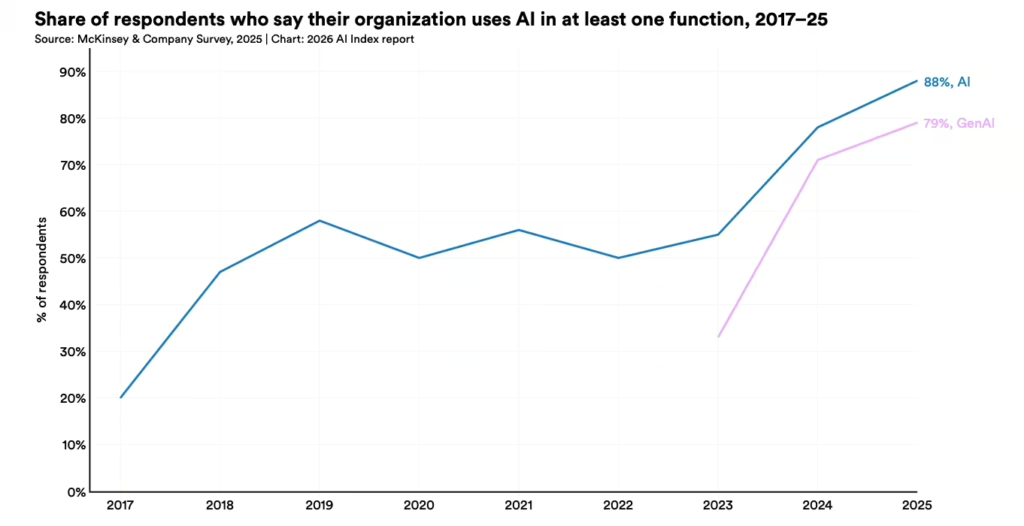
AI has fully captured the enterprise arena, but so have the risks that come with scaling it. Adoption is accelerating across every major industry. The 2026 AI Index Report by Stanford finds AI business usage grew to 88% in 2025, up from 78% the previous year.
Yet, most enterprises crowdsource an ‘AI strategy,’ with no clear transformation goals, standards, or precision.
The issue isn’t a lack of interest or investment. Rather, it is the hidden complexity of turning pilots into secure, governed, interoperable systems that actually drives P&L impact. For CIOs, CTOs, CFOs, and transformation leaders, this has created a new mandate to choose AI partners who can deliver measurable outcomes, not just prototypes.
The right consulting firm accelerates ROI, strengthens compliance, modernizes data foundations, and eliminates the technical debt that derails AI projects. The wrong one amplifies risk, causing budget overruns, workflow disruption, integration failures, and stalled transformation roadmaps.
This guide presents a transparent, enterprise-ready evaluation framework and a vetted list of the best AI consulting firms in 2026, based on technical depth, data engineering strength, and other parameters to deliver AI that works at scale.
Why Businesses Need an AI Consulting Company
Most enterprises enter AI with strong ambition but quickly hit operational bottlenecks, such as scattered datasets, unclear use cases, incompatible systems, and a lack of MLOps readiness.
This is why, even as organizations nearly double their AI budgets — projecting an average of $207 million over the next 12 months — 65% still struggle to scale AI use cases, according to KPMG’s Global AI Pulse Q1 2026. The enthusiasm is high, but a gap exists in the execution. AI consulting companies exist to bridge that gap by aligning business strategy with the technical and organizational foundations needed to make AI work in production.
A strong AI consulting partner helps enterprises avoid the trap of building isolated POCs that never reach the hands of real users. Instead, they guide teams through strategy, data readiness, engineering, workflow redesign, deployment, and long-term optimization. These are the exact stages where most organizations struggle on their own.
Where AI Consulting Firms Create Business-Critical Value
1. They solve the data readiness problem
Most enterprises think they have enough data for AI until models fail due to inconsistencies, missing fields, and poor lineage. Consultants build the data pipeline, governance, and storage layer that AI truly requires.
2. They bring a business-first AI strategy
AI works only when tied to cost reduction, efficiency gains, or new revenue. Enterprises must move beyond model demos. Consulting firms help enterprises anchor every use case to measurable KPIs.
3. They convert AI POCs into production systems
The biggest failure point for enterprises is the jump from experiment to enterprise deployment. Consulting partners bring MLOps, LLMOps, security, and monitoring frameworks that make AI sustainable.
4. They integrate AI into real enterprise systems
AI consulting firms integrate ERPs, CRMs, data warehouses, cloud environments, and legacy apps. Seamless integration is where AI creates ROI, and where most internal teams lack bandwidth and expertise.
5. They accelerate time-to-value and reduce implementation cost
Expertise prevents over-engineering, wrong architectural choices, and unnecessary technical debt. All these factors are critical in large organizations with complex ecosystems.
6. They support change management and adoption
AI is as much about people as it is about models. Consultants train teams, redesign workflows, and ensure the organization can operationalize new capabilities.
AI consulting firms help enterprises move from ‘we have an AI idea’ to ‘we have an AI system that generates measurable, repeatable business outcomes.’
Score your Shortlist
Take these five questions into every vendor conversation. The answers separate firms faster than a capabilities deck will.
We evaluated firms against seven criteria earlier in this guide. Five of them are ones you can test directly in a vendor conversation.
| Criterion | Ask | Strong answer | Weak answer |
|---|---|---|---|
| Production track record | What did you build, what metric moved, and is it still running? | A named outcome, measured, with a reference from a client more than a year past go-live | Logos, pilot counts, and “we can’t share details” |
| Who actually builds | Will the people in this room be on the delivery team? | Named senior engineers who scope the work and stay through launch | Partners in the pitch, unnamed staff in the SOW |
| Pilot to production | What does your first milestone deliver? | A deployed system with real users, on a defined date | A strategy document, roadmap, or assessment |
| Pricing model | Is scope fixed-price, and how is change priced? | Fixed scope with defined milestones and a written change process | Open-ended retainer, or hourly with no ceiling |
| Governance | When do permissions, audit trails, and compliance get designed? | In discovery, before the build starts | “Phase two,” or after security review flags it |
If a firm answers three of five well, it’s worth a second conversation. If it can’t answer the first two, no amount of strategy capability will fix what happens at delivery.
How We Selected the Best AI Consulting Company
Choosing the right AI consulting partner — whether you call them AI consulting firms, AI consulting companies, or artificial intelligence consulting companies is one of the most important decisions enterprise leaders make in 2026. The shortlist below ranks each AI consulting company on the criteria that actually matter to buyers.
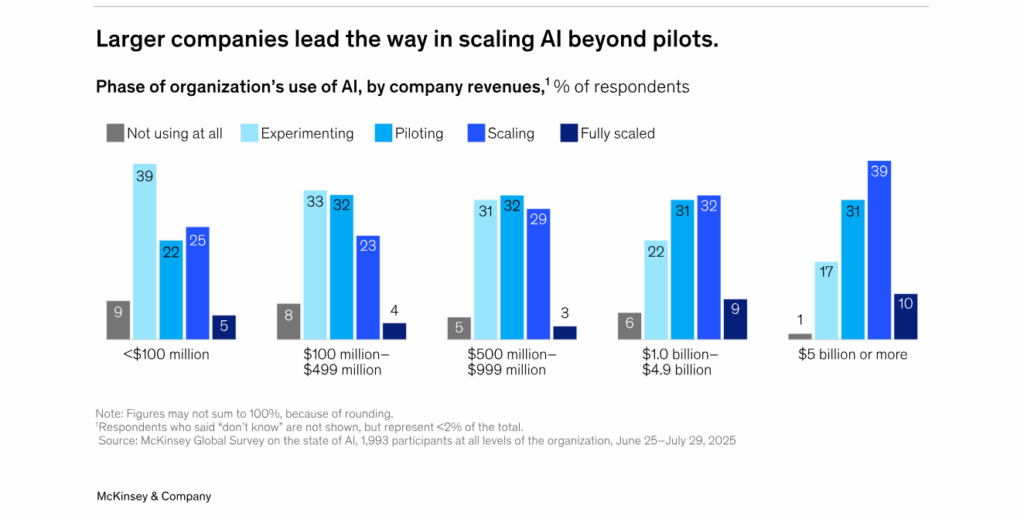
This list wasn’t assembled based on popularity, marketing polish, or paid placements. We built the list using a rigorous, enterprise-focused evaluation framework designed around what actually predicts AI success, including a firm’s delivery capability, technical maturity, integration strength, and proven business impact.
Each firm included had to demonstrate clear evidence that it can take an enterprise from idea to production and to scale, without overpromising or relying on shallow strategy decks. The goal here isn’t to create another generic top AI companies roundup, but to give decision-makers a shortlist they can trust during the RFP or vendor-evaluation stage.
Which Selection Criteria Actually Matter in 2026?
To maintain transparency and E-E-A-T credibility, we used the following criteria, each directly tied to enterprise outcomes:
1. Technical Depth Across the Full AI Stack
Firms must demonstrate expertise in model development for LLMs, ML, RAG, and agentic AI, and in the often-ignored layers of data engineering, pipelines, orchestration, governance, and MLOps.
2. Proven Enterprise Delivery Record
We prioritized companies with verifiable case studies, documented ROI, or measurable outcomes in environments where AI scale, compliance, and system complexity matter.
3. Cloud-Native Architecture & Multi-Cloud Experience
We considered companies with the ability to integrate AI into AWS, Azure, and GCP, including serverless architectures, vector databases, APIs, microservices, and secure multi-environment deployments.
4. MLOps Maturity & Production Reliability
Vendors must demonstrate they can operationalize AI through all stages, including monitoring, retraining, drift detection, model registry, governance, and beyond just delivering prototypes.
5. Security, Compliance and Governance Strength
The firm must show strong competency in security controls, auditability, role-based access, data privacy, and frameworks aligned with industry regulations.
6. Integration Skill With Legacy + Modern Systems
Because AI systems rarely exist in isolation, firms must excel at integrating models into ERPs, CRMs, WMS/TMS, data warehouses, cloud services, and legacy applications.
Related Read: Top AI Integration Companies in 2026: Full Comparison & Expert Guide
7. Client Feedback, Reputation & Industry Range
Companies with broad industry relevance, such as finance, insurance, logistics, real estate, healthcare, and SaaS, and strong long-term client retention were prioritized.
Only vendors who demonstrated strength across these dimensions made it into this list.
The 9 Best AI Consulting Firms in 2026
The AI consulting landscape is crowded, but only a handful of firms can truly take an enterprise from strategy to production and scale. Below is a curated list of the top AI consulting partners in 2026, selected for their technical depth, integration capability, enterprise results, and end-to-end delivery strength.
1. RTS Labs
RTS Labs stands out as one of the few AI consulting firms that combine deep engineering, enterprise-grade data infrastructure, and production AI deployment under one roof. RTS Labs doesn’t function like strategy-only consultancies. It is known for building scalable, compliant, real-world AI systems that integrate seamlessly into ERPs, data warehouses, cloud environments, CRMs, and operational workflows.
What differentiates RTS Labs is its ability to combine AI strategy, data engineering, cloud architecture, and MLOps into a single delivery model. This allows clients to move faster from idea to impact while avoiding the technical debt and governance gaps that derail many AI programs.
RTS Labs’ Core AI Consulting Services
RTS Labs provides full-cycle AI consulting services designed to support enterprise-scale adoption. The team works closely with leadership and technical stakeholders to identify high-ROI use cases, modernize data foundations, and deploy AI systems that integrate directly into operational workflows.
- AI strategy & roadmap development
- AI readiness assessment for data, infrastructure, and governance
- Data engineering & modern data stack/lakehouse builds
- Machine learning & predictive analytics
- Generative AI, RAG pipelines, copilots, AI agents
- MLOps & LLMOps implementation
- Systems integration across AWS, Azure, and GCP
- Workflow automation & enterprise orchestration
- Governance, compliance, and security frameworks
Industries Served by RTS Labs
RTS Labs serves Finance, Logistics, Insurance, Real Estate, SaaS, Manufacturing, Public Sector, Construction, and Healthcare-adjacent services.
RTS Labs’ Notable Projects and Case Studies
RTS Labs consistently demonstrates a focus on data modernization, operational integration, and measurable ROI. Rather than showcasing theoretical AI models, these projects demonstrate how AI and analytics have been integrated into real business workflows to enhance efficiency, reduce costs, and facilitate better decision-making.
- Global Sports Equipment Company
RTS Labs partnered with a global sports equipment company to overhaul a fragmented data architecture that was limiting analytics and AI adoption. By centralizing data ingestion, modernizing the data stack, and enabling advanced analytics, RTS Labs helped the organization reduce company-wide spending by 25% while improving access to insights across teams. - Financial Services Company
For a fast-growing financial services provider, RTS Labs integrated Salesforce, Marketo, Five9, and location intelligence tools to automate sales workflows, improve fraud and risk monitoring, and enable real-time reporting. The result was improved operational efficiency and record-breaking sales performance, demonstrating how integrated AI and analytics can directly impact revenue outcomes. - Construction-Focused SaaS Platform
RTS Labs redesigned analytics pipelines for a construction technology platform, enabling real-time data visibility and faster insights for end users. This transformation improved product usability, accelerated customer adoption, and positioned the platform for AI-driven enhancements.
RTS Labs’ Pros
- Full-stack capability (data → AI → integration → MLOps)
- Strong in enterprise-grade engineering, not just consulting
- Deep experience in regulated & data-heavy industries
- Very fast delivery cycles with transparent scoping
- Exceptional ability to scale AI beyond pilots
RTS Labs’ Cons
- Not the cheapest option for early-stage startups
- Best suited for firms seeking production AI, not simple experiments
RTS Labs’ Pricing
RTS Labs typically works on a project-based engagement model. Pricing varies based on scope, integration complexity, and AI maturity, but most enterprise engagements range from mid–six figures to low seven figures for full-cycle delivery.
RTS Labs is Best For
RTS Labs is best suited for mid-market and enterprise organizations that want to move beyond AI experimentation and deploy scalable, secure, and governed AI systems with measurable business impact.
2. LeewayHertz
LeewayHertz is well known for custom AI engineering, especially in LLM, multimodal solutions, and automation. Their strength lies in fast prototyping and building bespoke AI applications for digital-first companies.
LeewayHertz’s Services Offered
- LLM development & fine-tuning
- Computer vision
- AI-powered automation
- Digital product engineering
- Blockchain + AI integrations
LeewayHertz’s Industries Served
It offers services in healthcare, supply chain, manufacturing, retail, and fintech.
LeewayHertz’s Pros
- Strong LLM customization skills
- Mature computer vision practice
LeewayHertz’s Cons
- Less focused on enterprise governance
- Not as strong in complex legacy integrations
LeewayHertz’s Pricing
It offers custom pricing typically suited for mid-market budgets.
LeewayHertz is Best For
Companies need custom AI applications with strong UX and rapid development.
3. Addepto
Addepto has built a niche in ML, MLOps, and predictive analytics. Their engagements often revolve around structured data, BI, ML modeling, and dashboards.
Addepto’s Services Offered
- Machine learning models
- MLOps deployment
- Data engineering & analytics
- BI solutions
Addepto’s Industries Served
It has its presence in retail, finance, telecom, and manufacturing.
Addepto’s Pros
- Strong ML modeling skill set
- Good for PoCs and mid-sized analytics projects
Addepto’s Cons
- Limited enterprise-scale integration capability
- Not ideal for multi-cloud, multi-system AI deployment
Addepto’s Pricing
Its pricing is in the lower-mid range and best for small, mid-sized teams.
Addepto is Best For
Companies beginning their AI journey or needing ML-focused work.
4. Fractal Analytics
Fractal is a major enterprise analytics player specializing in decision intelligence, advanced analytics, and AI automation at a global scale.
Fractal Analytics’ Services Offered
- Decision intelligence platforms
- AI engineering
- Predictive & prescriptive analytics
- Customer analytics
Fractal Analytics’ Industries Served
It offers services in the CPG, retail, healthcare, and banking sectors.
Fractal Analytics’ Pros
- Deep enterprise pedigree
- Strong analytics & decision intelligence models
Fractal Analytics’ Cons
- High pricing
- Often optimized for Fortune 500–level engagements
Fractal Analytics’ Pricing
Premium enterprise-tier pricing.
Fractal Analytics is Best For
It is good for large enterprises looking for strategic analytics transformation.
5. Scale AI
Scale AI is a leader in preparing high-quality training data for advanced AI models and has become a major provider for organizations building generative AI or multimodal systems.
Scale AI’s Services Offered
- Data labeling
- Model evaluation
- AI quality assurance
- RAG enablement
Scale AI’s Industries Served
Autonomous vehicles, defense, government, enterprise tech.
Scale AI’s Pros
- World-class data infrastructure
- Strong evaluation frameworks
Scale AI’s Cons
- Not a full-service AI consulting firm
- Limited hands-on integration capability
Scale AI’s Pricing
Its pricing model is data-volume based.
Scale AI’s is Best For
It is best for companies needing training data, eval pipelines, or large-scale annotation.
6. Slalom
Slalom is a global consulting firm known for its cloud, digital transformation, and analytics capabilities. While not an AI-first company, it has strong enterprise consulting experience. It is known for strong partnerships with AWS, Google Cloud, and Microsoft.
Slalom’s Services Offered
- Cloud modernization
- AI strategy
- Analytics platforms
- Business transformation
Slalom’s Industries Served
Retail, financial services, public sector, healthcare.
Slalom’s Pros
- Strong cross-cloud expertise
- Good change management practice
Slalom’s Cons
- Delivery models can be slower and people-heavy
- Less focused on deep AI engineering
Slalom’s Pricing
Mid-high consulting tier, depending on size.
Slalom’s Best For
It is best for organizations needing hybrid cloud transformation with AI components.
7. Accenture
Accenture offers one of the broadest AI transformation portfolios with global resources, industry frameworks, and large-scale delivery capability.
Accenture’s Services Offered
- Enterprise AI transformation
- Analytics & automation
- Industry cloud solutions
- GenAI labs & innovation centers
Accenture’s Industries Served
It serves every major industry.
Accenture’s Pros
- Extensive enterprise credibility
- Massive delivery capacity
Accenture’s Cons
- High cost
- Less agile for fast-turnaround AI builds
Accenture’s Pricing
It has premium pricing tiers, best for large enterprises only.
Accenture is Best For
It is best for Fortune 500 companies needing a multi-year transformation.
8. IBM Consulting
IBM Consulting combines deep enterprise AI expertise with WatsonX, their proprietary generative AI platform. They are known for strong governance, security-first approaches, and specialized industry solutions.
IBM Consulting’s Services Offered
- AI strategy & governance
- Watsonx platform implementation
- Risk, compliance, and responsible AI
- Hybrid cloud modernization
IBM Consulting’s Industries Served
It offers services in banking, healthcare, the public sector, and manufacturing sector.
IBM Consulting’s Pros
- Deep governance & compliance expertise
- Strong hybrid-cloud frameworks
IBM Consulting’s Cons
- Less flexible for non-IBM stacks
- Long enterprise timelines
IBM Consulting’s Pricing
High enterprise tier for enterprise-scale engagements.
IBM Consulting is Best For
It is best for heavily regulated companies needing compliant-by-design AI.
9. Brainpool
Brainpool provides access to a global network of PhD-level AI researchers, making it ideal for organizations seeking novel ML solutions.
Brainpool’s Services Offered
- Custom ML R&D
- AI consulting
- Algorithm design
- Data science services
Brianpool’s Industries Served
Retail, healthcare, manufacturing, tech.
Brainpool’s Pros
- Strong research capability
- Good for algorithm-heavy projects
Brainpool’s Cons
- Not ideal for enterprise integration or MLOps
- Limited full-stack engineering depth
Brainpool’s Pricing
It has a flexible, project-based pricing structure.
Brainpool is Best For
Companies exploring new ML approaches or R&D-heavy initiatives.
Also Frequently Shortlisted
Three firms come up in nearly every enterprise AI evaluation and aren’t ranked above, not because they fall short but because they occupy the same category as Accenture and IBM Consulting — global, consulting-led, enterprise-scale — and this list caps at nine.
Deloitte. AI strategy tied closely to risk, audit, and regulatory practice. Strong fit for organizations where the AI question is inseparable from a compliance or controls question. Consulting-led, with delivery frequently staffed through partners.
Cognizant. A large systems integrator with deep application and infrastructure modernization capability, concentrated in healthcare and financial services. Best suited to AI embedded inside a broader modernization program.
Capgemini. Global engineering and consulting, with Capgemini Invent handling strategy and the wider group handling build. Strongest where AI intersects industrial or engineering systems, and where a European delivery footprint matters.
If your shortlist includes one of these alongside a specialist firm, the question is usually the same one this guide keeps returning to: who will actually build the system, and who will still be there after it launches.
How to Choose the Best AI Consulting Company
The real question isn’t which firm is best — it’s which one fits how you buy and what you’re trying to ship. Start by defining your AI maturity level: organizations still running pilots need a different partner than those scaling across departments. Set explicit outcomes and KPIs before you shortlist, whether that’s reduced operating cost, better forecast accuracy, automated workflows, or new revenue. Then assess technical depth across data engineering, model development, integration, and MLOps — the layers where most AI programs actually stall.
From there, the shortlist narrows by buyer type.
If you’re an enterprise running a multi-year program
Accenture, IBM Consulting, and Fractal Analytics are built for this. Global delivery capacity, industry frameworks, and the governance structures large organizations require. Expect premium pricing and timelines measured in quarters — and expect strategy and delivery to sit with different teams, which is the trade-off for scale.
If you’re mid-market and need one system in production
RTS Labs, LeewayHertz, and Addepto work at this scale. The priority here is a focused build your team can staff and operate: a defined scope, integration with the systems you already run, and a timeline measured in weeks. RTS Labs suits teams that want a governed production system on their existing stack; LeewayHertz suits custom AI applications; Addepto suits ML and predictive analytics work.
If you’re in a regulated industry
This one cuts across size. IBM Consulting is the strongest fit for large regulated enterprises needing compliant-by-design AI, with deep governance and security expertise. At mid-market scale, RTS Labs builds permissions, audit trails, and governance into the system from the start. Either way, ask how governance is handled during the build rather than added after — retrofitted compliance usually means rebuilding.
If you’re exploring rather than building
Scale AI is the fit for training data, evaluation pipelines, and large-scale annotation. Brainpool suits R&D-heavy work and novel ML approaches. Neither is a full-service consulting partner, and neither is where you go for production integration.
Why Choose RTS Labs Among the Best AI Consulting Firms
The right AI consulting partner aligns strategy, engineering, governance, and execution, without forcing you into rigid frameworks or inflated timelines.
Across the AI consulting landscape, RTS Labs stands out for one defining reason. It consistently delivers production-grade AI systems, not just ideas or pilots. Where many firms focus primarily on strategy or modeling, RTS Labs combines deep data engineering, AI development, and enterprise integration into a single execution model.
RTS Labs’ strength lies in its ability to modernize data foundations, deploy scalable AI architectures, and operationalize models through robust MLOps and governance frameworks. This makes it particularly effective for mid-market and enterprise organizations operating in regulated or data-intensive environments where reliability, security, and ROI matter more than experimentation.
Clients choose RTS Labs for:
- End-to-end delivery: Strategy → data → AI → deployment → optimization
- Engineering-first execution backed by measurable outcomes
- Enterprise-grade AI, including RAG pipelines, copilots, and agentic workflows
- Faster time-to-value without sacrificing governance or scalability
We partner closely with internal teams to build AI systems that integrate into real workflows and continue to deliver value long after launch.
Choosing the Right AI Consulting Partner in 2026
AI is no longer optional, but successful AI implementation is far from guaranteed. As adoption accelerates, the difference between leaders and laggards will come down to execution quality, data readiness, and partner choice. The firms highlighted in this guide represent some of the strongest AI consulting options available today, each suited to different organizational needs and maturity levels.
For enterprises seeking a consulting partner that combines strategic clarity, engineering depth, and production reliability, RTS Labs offers a compelling balance. Its ability to take AI from concept to live, governed systems makes it a strong choice for organizations serious about scaling AI with confidence.
If your organization is ready to move beyond pilots and into production-grade AI, RTS Labs can help you do it right.
Book an AI consulting consultation with us today!
Let’s turn AI ambition into operational reality.
FAQs
1. How do I know if my company needs an AI consulting firm or just internal hires?
If your AI initiatives are stuck at pilots, lack clean data foundations, or struggle with deployment and monitoring, an AI consulting firm can accelerate outcomes far faster than incremental hiring, especially when timelines and ROI pressure are high.
2. What’s the difference between AI consulting and AI development services?
AI consulting focuses on strategy, readiness, and roadmap alignment, while strong firms like RTS Labs also deliver hands-on engineering, data pipelines, integrations, and MLOps to take AI into production.
3. How long does it typically take to see ROI from AI consulting engagements?
Enterprises with clear use cases and strong execution partners often see measurable impact within 3–6 months, particularly in automation, analytics, and operational efficiency initiatives.
4. Are AI consulting firms safe for regulated industries like finance or insurance?
AI consulting forms are safe, provided the firm has experience with governance, auditability, and compliance. RTS Labs, for example, embeds governance and security into AI architectures from day one.
5. Why do enterprises choose RTS Labs over larger global consultancies?
Enterprises choose RTS Labs for engineering depth, faster execution, and production-grade delivery without the cost, rigidity, or slow timelines common with large, strategy-heavy firms.
6. What AI technology consulting firm has the best reputation?
Reputation is best measured by analyst recognition, named enterprise clients, and verifiable production case studies. The firms ranked at the top of this list lead on all three.
7. What are the top AI consulting firms for mid-market companies?
Global firms like Accenture and IBM Consulting are built for enterprise budgets; many boutiques lack the depth to reach production. The mid-market fit is in between. From this list: RTS Labs for a production system integrated into your existing stack, LeewayHertz for custom AI applications, Addepto for ML and predictive analytics.
8. How does Slalom compare on strategy vs execution?
Slalom is stronger on the front half. Cloud modernization, data strategy, analytics platforms, and business transformation are core capabilities, and change management is a genuine strength — backed by AWS, Google Cloud, and Microsoft partnerships. Data and legacy modernization fit that profile well.
Where it thins is AI deployment and MLOps. Slalom isn’t an AI-first firm, and its delivery model is people-heavy and slower, so taking a model into production and keeping it accurate afterward isn’t its center of gravity.
The practical read: Slalom suits organizations running a broad cloud and data transformation with AI as one component. Firms built around delivery — RTS Labs among them — fit better when the goal is a specific AI system in production on a fixed timeline. Plenty of enterprises end up using both.
9. How do I evaluate an AI consulting firm’s track record?
Ask for case studies with named outcomes, not logos — what metric moved, by how much, and over what timeframe. Then check whether those systems are still running: production longevity separates delivery from demos. Ask who on the pitch team actually built them, and request a reference from a client whose engagement ended more than a year ago.
10. How do I choose a firm that delivers production outcomes, not just pilots?
Make production a term of the engagement, not a hope. Require a phase-1 scope that ends in a deployed system with real users, an operating metric agreed before the build starts, and integration with the tools your team already works in. If the first milestone is a strategy document, you’re buying a pilot.
11. How are the major firms positioning their AI consulting offerings?
Three patterns. The global firms — Accenture, IBM Consulting, Slalom — sell multi-year transformation backed by scale, governance, and in IBM’s case a proprietary platform in WatsonX. Data-infrastructure specialists like Scale AI and Fractal sell the layer underneath: training data, pipelines, decision intelligence. Boutique build firms sell speed to a working system. Most buyers need the third and get pitched the first.