Discover how we’ve transformed businesses across industries with innovative, results-driven Data and AI solutions—explore our case studies for real-world success stories.
An industrial manufacturer running high-speed strapping and yarn lines needed to catch defects the moment they start. RTS Labs built a proof of concept showing it can be done with...
RTS Labs built a proof of concept for a high-throughput recycler that needs to catch unsafe behavior on its conveyor lines the moment it happens. The result is a real-time...
A venture-backed live audio social platform needed product and finance decisions backed by analysis rigorous enough to act on — not another dashboard. RTS Labs embedded senior data science across...
Landstar agents jumped between SOPs, shipment systems, and the capacity portal to answer a single customer question. RTS Labs built an AI copilot directly into the Agent Portal — RAG...
A global sports equipment manufacturer — 1,000+ employees designing custom golf gear and apparel across retail and ecommerce — had outgrown a patchwork data architecture that couldn't support the advanced...
Icon Custom Pools' sales process couldn't keep up. Generating a quote required multiple systems and manual calculations — taking up to a full day. By the time proposals reached homeowners,...
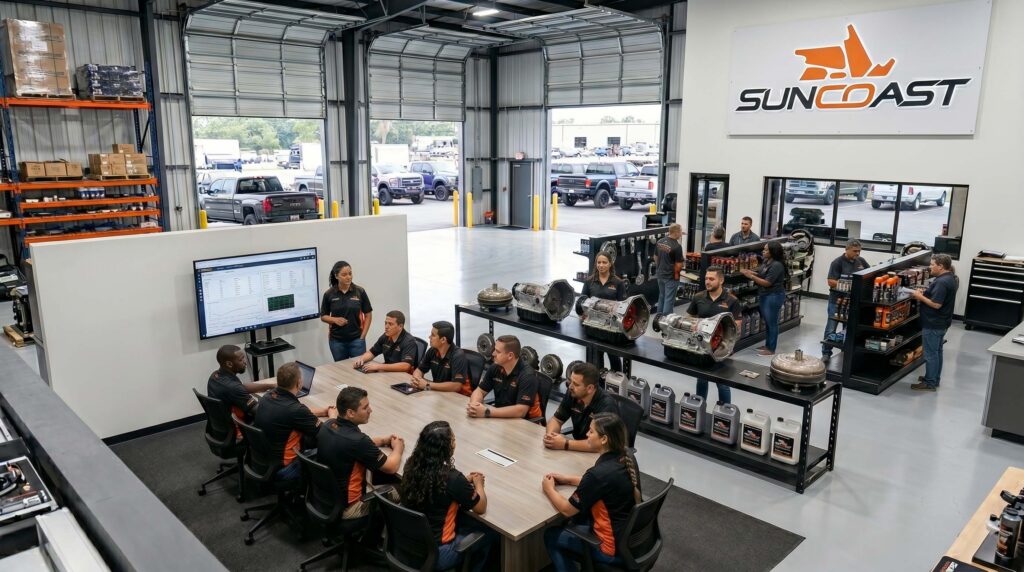
Suncoast's technicians were constantly pulled off engineering work to field routine product and warranty questions. RTS Labs built a RAG-powered AI chatbot that answers instantly from Suncoast's own manuals, warranty...
A financial services company provides credit and payment processing through its proprietary enterprise CRM platform. Since October 2021, RTS Labs has embedded senior CRM platform engineers directly into the client's...
SkillCloud's HR consultants were capped at roughly 10 clients each, losing hours every week to repetitive benefits, leave, and payroll questions. RTS Labs designed a secure, source-cited AI assistant with...
A pharmaceutical innovator's reliance on a limited third-party data vendor was blocking growth and eroding internal trust. RTS Labs engineered a scalable AWS data platform with standardized reporting in 20...
A non-bank HSA trustee's fragmented, outdated portal was driving high support costs and eroding participant confidence across five user roles. RTS Labs redesigned the full experience into a unified, role-based...
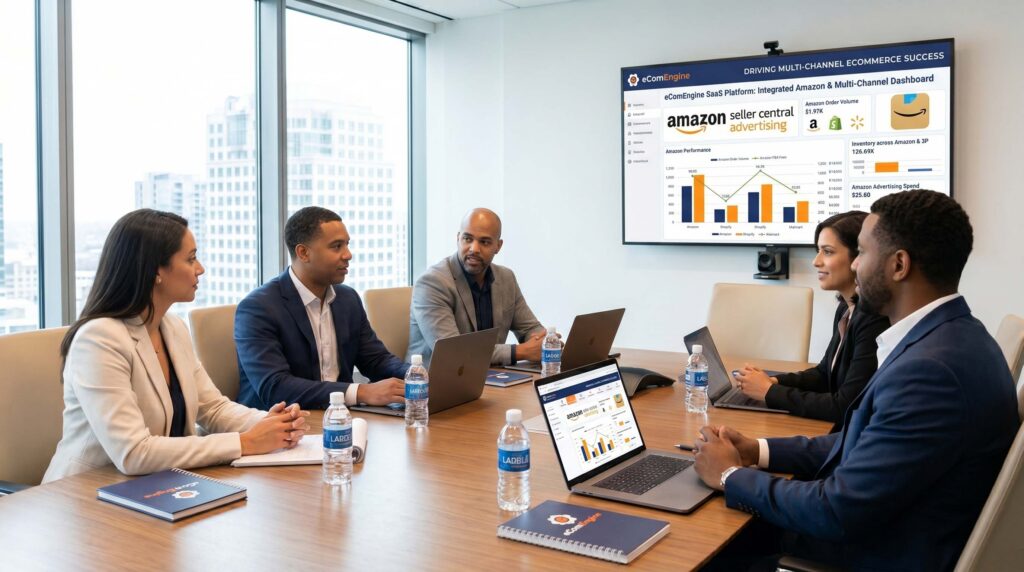
eCom Engine's SaaS products had hit market saturation — growth required expanding into analytics, but the team had zero in-house expertise and no clear technology path. RTS Labs ran a...
An employment law firm's paralegals spent up to 120 minutes per demand letter — manually parsing case files, identifying applicable claims, and populating templates. RTS Labs built an AI-powered Co-Pilot...
A rapidly scaling personal finance company needed more than a CRM — it needed a unified operations platform to manage dealer relationships, synchronize daily commissions, and coordinate field, inside, and...
A short-term vacation rental company on North Carolina's Outer Banks was spending more engineering time maintaining aging infrastructure than building for the future. RTS Labs ran a DevOps discovery and...
Evergreen Enterprises wholesales home, garden, gift, and seasonal décor — 24,000+ SKUs across four seasonal cycles a year — to thousands of retailers nationwide. Their sales teams relied on slow,...
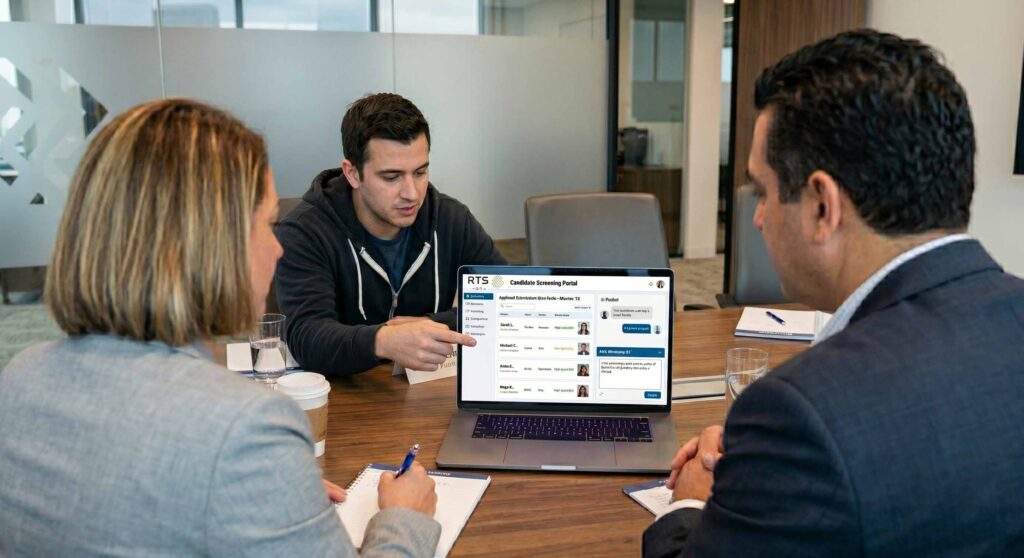
The Fortune 500 retailer's recruiters were spending most of their day on resume reviews, qualification cross-checks, and interview scheduling. RTS Labs built an AI system designed around the recruiter —...
Cause Strategy Partners — a nonprofit consulting firm helping organizations build stronger boards and drive mission impact — was drowning in fragmented data across HubSpot, BoardLead, BoardLearn, and a tangle...
A financial due diligence firm's analysts were burning 6+ hours per report on manual document extraction — work that required patience, not expertise. RTS Labs built a secure, RAG-powered platform...
Stride's legacy database was the anchor dragging their entire engineering org. Queries ran for minutes. Environment syncs failed routinely. Feature releases stalled sprint after sprint. RTS Labs used AI-assisted schema...
A top-50 U.S. freight broker was losing revenue to manual load matching, high empty-mile rates, and pricing decisions made on gut instinct. RTS Labs deployed an AI-powered freight matching engine...
Ready to Build the Next Success Story?
If you have a workflow that is too manual, data that is hard to trust, or an AI idea stuck in pilot, let’s talk through what a practical phase 1 could look like.