
Home / AI Agents for Private Equity
Agents for the Deal. And for Every Company You Own.
Your competitors automate the deal. We automate the deal and the portfolio.
Diligence agents for the deal team. Operating agents inside the companies. Build it once, then deploy it into the next company with the same problem.
Proven in one company. Fixed scope, fixed ship date.
Same pattern, different data, separate environments. The second deployment is configuration, not a rebuild.






Getting It Built Is Easy. Getting It Used Is the Job.
A demo survives a partner meeting. It does not survive a 200-person company with two people in IT and a CFO who wants to know where a number came from. We build for that day.
Its own identity, its own limits
Every agent gets a service identity and least-privilege access, system by system. It reads first. It writes only where someone signed off.
One company never sees another
Every deployment is isolated. Separate credentials, separate stores, separate logs. Portfolio reporting aggregates at the fund, one way, on figures you already receive.
A person still decides
Agents read, draft and recommend. They do not commit capital, sign anything, or advance a deal. A named human makes the call.
Every claim back to the page
A finding points to the document it came from. An IC can interrogate the memo instead of trusting it, which is the only way this gets used twice.
Built once, deployed again
Same pattern, new data, new environment. That is the whole economic argument, so we build the first one as a template rather than a one-off.
It runs without your IT team
Monitoring, drift checks and the 6am problem are ours. Mid-market companies cannot absorb a system that needs babysitting, and most agents die there.
These are the same controls we publish openly, applied to a fund and its companies. See the governance framework in full →
Sixteen years building production systems, well before anyone called it agentic.
A firm with a bench, not a two-person shop that disappears after launch.
No offshore delivery. The engineers who build it are the ones on your calls.
We build in your environment. Your data does not leave it.
Bring us one workflow. We prove it pays, build it properly, control it so security signs off, and keep it running after everyone else has moved on.
One workflow, in one company. The portfolio conversation comes after it works.
“That’s the Portco’s Problem. Not Ours.”
Until the third company asks for the same thing. Most firms automate the deal cycle, where the work happens once. The compounding is on the other side of the fence, inside the companies you already own.
One company. One workflow.
The company where an operating number is stuck and the cause is manual work, not strategy. Quoting, onboarding, month-end, service response.
Two weeks to a verdict. Fixed fee.
We prove whether an agent moves that number before anyone commits to a build. Sometimes the answer is that it does not, and you get that in writing.
Then the company next door.
Quoting, onboarding, month-end and service response look the same in every business, whatever the ERP underneath. Deployment two is integration, not design, and you do not pay for the thinking twice.
One agreement. One team.
Contracted at the fund, deployed inside the companies. You are not running fourteen procurement conversations with the same vendor.
That is the difference between a portco project and a portfolio program. Only one of them shows up in the value creation plan.
Agents for the Deal Cycle and the Portfolio
Document-heavy, deadline-heavy work on the deal side. Repeatable operating work on the portfolio side. Filter by where in the cycle it sits.
Source narrows what is worth your time. Diligence reads the room faster than a team can and cites every finding. Operate is the half that runs inside the companies after the deal closes.
Deal Sourcing & Signals
Ranked pipeline from proprietary signals.
Deal OriginationCIM & Teaser Screening
Every teaser read. Pass or advance, with reasons.
Deal TeamFinancial DD Accelerator
Revenue quality, margin drift, add-backs surfaced from the data room.
Deal Team / QoECommercial DD Research
TAM, moat, and concentration stress-tested with cited sources.
Deal TeamIC Memo Assembly
Every claim cited. Every stage rolled up.
Investment CommitteeLegal & CoC Review
Change of control, IP, deal-killers surfaced early. Counsel still signs.
Deal LegalPortco Ops Copilots
The 100-day plan, staffed by agents: quoting, onboarding, reporting inside the company.
Portfolio OperationsPortfolio KPI Monitoring
Every company's signals in one view. Anomalies flagged early.
Portfolio OperationsLP Reporting & DDQ
Quarterly letters and DDQs drafted from live data.
Investor RelationsExit Readiness
Comps mapped, buyer universe built, sell-side data room prepped.
Deal Team / Portfolio OpsNothing in that stage yet.
Inside the Companies, Not the Deck
Two of these are portfolio companies of other sponsors. One is a diligence engagement. All of them are named, and the numbers are published.
- Renuity, a Greenbriar Equity Group portfolio company: 90% less manual data handling. Commission calculations that depended on keying vendor invoices by hand, now extracted, validated and normalized straight into the payout process.
- Bio-Response Solutions, a 3 Boomerang Capital portfolio company: 60% less time on documentation. Engineers stopped drafting the same technical responses and cross-referencing the same specs, and the company completed more projects per quarter without hiring.
- A financial due diligence firm: 50% faster reports. Analysts were reading compliance manuals and financial statements to extract a handful of data points. Now the extraction and the evaluation are assembled for them, and thousands of analyst hours a year go to interpretation instead.
- Icon Custom Pools: quotes from one day to five minutes, and a close rate up more than 40%. The bottleneck was a person reading a request and assembling a price. Now the agent assembles it and a person sends it.
- SkillCloud: three times the client capacity, 40% faster responses. Same team, same operating model, because the repetitive middle of the process stopped needing a human.
We will walk you through both on a call, including what did not work the first time. More named work, workflow traces and the full stack live on our development page.

Rob Lubeck, Chief Revenue Officer. Takes the first call and scopes the diagnostic.
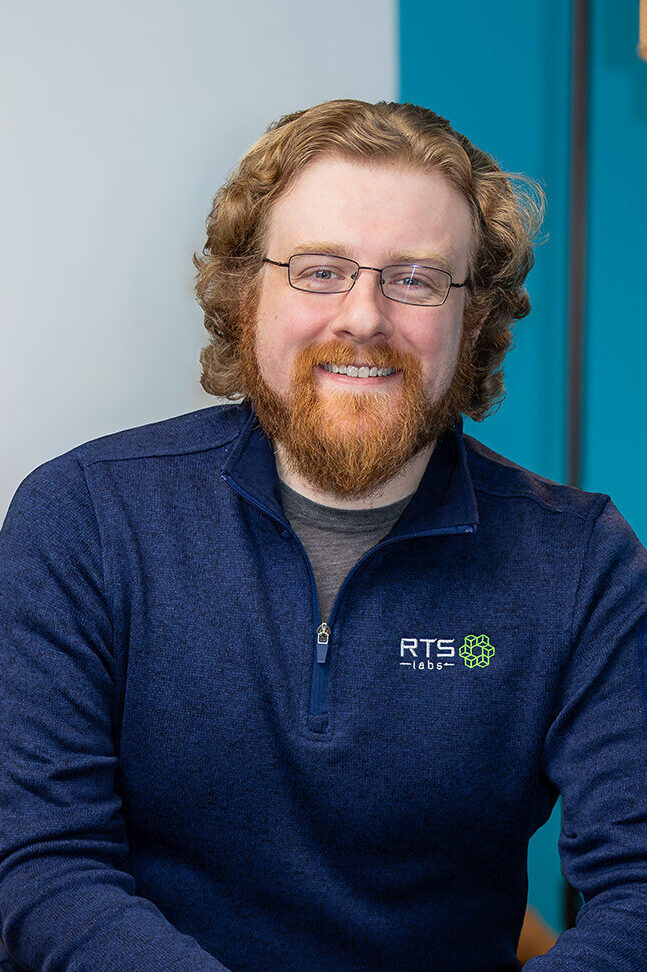
Alex Hogancamp, Director of AI. Writes the verdict and owns what gets built.
Three Sensible Places to Start
Not the biggest theoretical payoff. The ones where the workflow is bounded, the data already exists, and you can prove it inside a quarter.
Portco Ops Copilots
The company where operations is the constraint on growth. This is the one we have already shipped, and the one that replicates.
Financial DD Accelerator
Analysts stop retyping the data room and start arguing with it. Every finding traced back to the document it came from.
Portfolio KPI Monitoring
Read-only. Nothing written back to any company’s systems. The easiest first yes you will get from a portfolio company CFO.
Bring us the company that is stuck and we will tell you straight whether an agent is the right answer for it.
Fair Enough. The Longer Answers.
We have fourteen portfolio companies. Where does this actually start?
In one of them. Pick the company where an operating metric is stuck and the cause is manual work, not strategy. We spend two weeks proving whether an agent moves that metric, then build it if the answer is yes. That first build is a normal project with a fixed scope and a fixed ship date.
What changes the maths is the second one. Once the pattern exists, deploying it into another company with similar operations is configuration and integration work, not a rebuild, so it lands faster and costs materially less.
That is why we treat private equity as a portfolio program rather than a series of unrelated portco projects. You are not buying fourteen builds. You are buying one build and a way to spread it.
Who pays, the fund or the portfolio company?
Both models work and we have no preference. Most firms run the diagnostic at the fund, because that is where the decision to standardize gets made, and then push the build cost down to the company whose P&L the agent improves. Some funds carry the whole thing at the platform level and treat it as an operating capability they offer their companies.
What we would push back on is fourteen separate procurement conversations. One agreement at the fund, deployments inside the companies, one delivery team you already know. Otherwise the coordination overhead eats the advantage that made this worth doing.
What about MNPI and data-room confidentiality?
Deal-side agents run inside your environment, against your data room, with credentials scoped to that deal and revoked when it closes or dies. Nothing is used to train a shared model, and no portfolio company deployment can see another company’s data or any deal material.
Each deployment is isolated: separate credentials, separate stores, separate logs. If your compliance policy requires an information barrier between the deal team and portfolio operations, the deployments respect it, because they are physically separate systems rather than one system with permissions bolted on.
Portfolio-wide reporting is the one exception, and it works the other way round. Nothing reads across companies. Each deployment pushes the figures the fund already receives up to a fund-level view. No portfolio company can query another, and the fund does not reach into any of them.
Does a portfolio company need an IT team to run this?
No, and assuming otherwise is the most common reason this kind of work fails inside a mid-market company. A business with two people in IT cannot absorb a system that needs babysitting. So we run it. Monitoring, drift checks, model updates, the 6am problem when something upstream changes its file format.
The company’s team owns the process and the exceptions. We own whether the thing is up. That arrangement is the difference between an agent that survives the first quarter and one that quietly stops being used.
Should we build these, or buy a platform?
Buy on the deal side, mostly. Hebbia, AlphaSense and Model ML are real products with real teams, and for data-room search, market research and document question-answering they will beat anything built for one firm. If your diligence problem is reading faster, buy.
Build where the work is shaped like your firm or your companies: the seams between a portfolio company’s operating systems, the reporting pack every one of your companies assembles differently, the quoting or onboarding workflow that is the actual bottleneck in a business you own. No vendor is going to build that for one fund, and it is where the value creation number actually moves.
We will tell you which side of that line you are on during the diagnostic, including when the answer is that you do not need us.
What if the portfolio company's management team doesn't want it?
Then we do not build it, and you have spent two weeks finding that out instead of eighteen months. We have never seen a fund-selected tool succeed in a company whose management team did not ask for it.
So the diagnostic runs with the operating team, not at them. We sit with the people who do the work, and the workflow we scope is one they nominated as painful. If the CEO’s honest position is that nothing hurts enough to change, that is a real answer and you should hear it early.
The technical half of adoption is our problem. The half where a management team has to want this is the half that kills portfolio programs, and it is worth being blunt about it before anyone signs.
What happens to this at exit?
It stays with the company. We build in your environment or the company’s, the code and the configuration belong to the business, and nothing depends on a system only we can reach.
A buyer’s diligence team should find an operating capability that conveys with the company, not a vendor dependency that gets marked down. Practically, that means the agent keeps running if you replace us, and we will say so in writing in the agreement.
We would rather have that conversation before the build than during a sale process, so raise it on the first call and we will walk through exactly how it is structured.
Do we have to take all ten?
No, and nobody ever has. You take one, in one place, and it either moves a number or it does not. The second conversation is much easier because the controls, the environment and the review are already done.
What does it cost to find out if one of these is worth doing?
A fixed-fee diagnostic: two weeks, a clear verdict on the workflow, the integration surface mapped, and a build estimate you can take to your investment committee or your portfolio company’s board. Delivered as the Lumynate ROI Audit, from $30K, with half the fee crediting against the build.
For the build itself, first builds are fixed scope with a fixed ship date and typically land in the low-to-mid six figures, driven almost entirely by how many systems the agent has to touch. Subsequent deployments of the same pattern into another company cost materially less.
The diagnostic gives you the real number for your case before you commit to anything.
Every agent above is built on Lumynate, our system for building and operating agents: the method, the reusable component library, the guardrails, and the team that keeps it running after go-live. It is also why the second deployment costs less than the first.
Start With One Company
Thirty minutes, one workflow, and an honest answer about whether an agent belongs anywhere near it.
Hiring a firm rather than browsing agents? Start at AI consulting for private equity.