
Your Pilot Works.
It's Still Not in Production.
Two weeks. Every AI initiative you own gets a verdict: go, kill, or fix. Then the fix gets built by the people who found it.
The problem is almost never the model. It is the thing upstream of it that nobody has named yet.
of enterprises already use GenAI
Economist, Unlocking Enterprise AI
are confident their infrastructure can actually run it
same report
of agentic AI projects will be canceled by the end of 2027
Gartner
Most of those will not be technical failures. They will be projects nobody could build a case for in time. Whether you are in that 40% comes down to putting a number on it before the budget conversation. That is a two-week problem, not a two-year one.






It Passed the Demo. Then It Sat There.
A pilot that works and a system that ships are different problems. Six things stop the second one. In almost every stalled initiative we have looked at, it is one of these rather than the model.
Built to Impress, Not to Survive
Pilots handle a demo dataset and one friendly user. Production means concurrent load, real data volume, and an SLA. That gap is wider and more expensive than anyone scoped.
No Number Anyone Believes
Someone asks what this does for the business. Without a specific figure and a date, it dies quietly in committee rather than failing loudly.
Security Review With No End Date
Enterprise AI means enterprise scrutiny. Reviews, data governance, and regulatory gates hold a project indefinitely when nobody planned for them on day one.
The Sandbox Was the Easy Part
A clean extract is not your legacy systems, your auth layer, and your real data quality. That is where the months go.
The Champion Moved On
Pilots have sponsors. Long stalls lose them. By the time you are ready to push, you are selling it internally again, from a standing start, to someone new.
The Wrong Kind of Help
Most firms respond to a stall by proposing a rebuild. That writes off what you paid for and restarts the clock. It is also the most profitable thing they could recommend.
Every one of these is upstream of the model. That’s why buying more model rarely fixes it.
Three Verdicts. One Per Initiative. No Fourth Option.
Most assessments end in a roadmap, which is a way of not deciding. This one ends in a call on every initiative you own, with the reasoning written down so you can argue with it.
Go
It works, the case holds, and production is closer than you think. Usually one permission boundary, one integration, or one missing owner.
Fix
The idea is right, the execution is wrong. Data in the wrong place, a workflow nobody mapped, or something automated before it was ever measured.
Kill
Too rare, too cheap, or too variable to earn automation. Or the value lands somewhere the business cannot collect it.
Automation is earned, not assumed. If nothing in your portfolio has earned it yet, we would rather you heard that in week two than after another year of funding it. Whether that was worth $30K is your call to make, not ours to assert.
Hundreds of Systems Shipped. Six Agents You Can Inspect.
Fair question after all that: do these people actually ship? Named production agents, real workflow traces, the tech stack, and the numbers behind them live on our development page. That is also where you will see what a fixed-price build looks like when it lands.
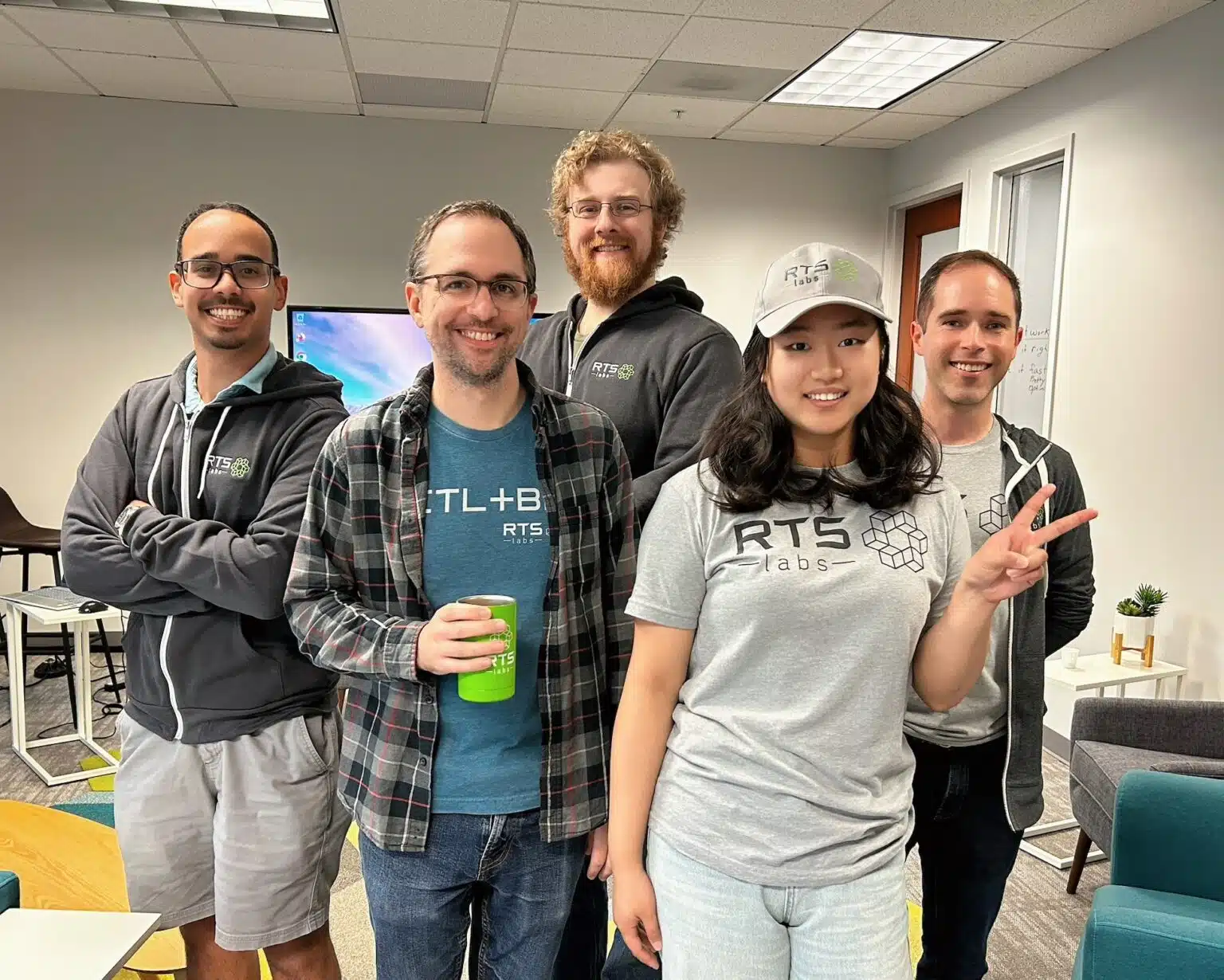
The senior engineers who ship it are the ones you meet on the call.
Bring us one workflow. We prove it pays, build it properly, control it so security signs off, and keep it running after everyone else has moved on.
Rescue is the first clause. It is also the only one you have to buy before you know whether the rest are worth it.

Ten Working Days, and You Know
Fixed scope, fixed fee, fixed end date. What it costs your team, stated plainly rather than minimised: four hours from whoever owns the AI work, two from finance, and forty-five minutes each from five to eight interviewees. Nobody prepares anything. We do the rest.
Inventory
Every AI initiative you own, in one list, including the ones a business unit started without telling IT.
What it does, who sponsored it, what it cost so far, and where it is stuck.
Usually the length of the list.
The Real Blocker
We go under the hood on the initiatives that matter.
Architecture, data pipeline, integration surface, and the security and compliance path.
The people who built it and the people blocking it. Separately.
The stated blocker and the actual blocker differ often enough that we always check both.
The Economics
Frequency times cost of the work times realistic improvement, on your numbers.
With finance, for real labor cost. Not a loaded rate somebody guessed in a deck.
Where the saving lands and who collects it. Hours freed inside a team that keeps every head is not a saving your CFO can book, and we will say so.
A confidence level on every figure, and build cost next to return, so you read a payback period rather than a benefit.
The Verdict
Go, kill, or fix on each initiative, with the reasoning and a fixed-price scope for anything worth building.
Your CFO and your security lead, without a translator.
Delivered as the Lumynate ROI Audit. That is what you will see on the SOW.
The Build, If There Is One
The engineers who found the blocker are the ones who fix it. Fixed scope, fixed ship date.
Half your audit fee comes off it. The diagnosis nets to $15K if you build with us.
If nothing is worth building, it ends here and you have your two weeks back.
What Lands on Your Desk
One document, roughly twenty pages, written to be read rather than presented. No deck. Here is the table of contents, so you know what you are buying before you buy it.
The Verdicts
Every initiative, one line each: go, kill, or fix, and the single sentence that decides it. If your board only reads one page, this is the page.
The Blocker, Named
What is actually stopping it, how we established that, and what we ruled out on the way. Written so your engineers can disagree with the reasoning rather than just the conclusion.
The Economics
Frequency, labor cost, realistic improvement, build cost, payback period, and a confidence level on each figure. Sourced to your data with the source named.
The Sequence
Ordered steps with a named owner and a cost on each, split into what your team closes and what you would want us for.
The Security Path
What your security and compliance reviewers will ask, and the artifacts that answer them, so the review does not become the next stall.
The Scope
A fixed-price, fixed-date statement of work for anything that earned a build. Signable, or usable as a benchmark to quote elsewhere.
Want to see one before you commit? Ask on the call and we’ll walk you through a redacted verdict page from a real engagement.
What Is Another Quarter Stalled Worth?
A stalled pilot has two costs. What you spent, which is gone. And what it was meant to return every month it isn't live, which is still running. Only the second is worth arguing about, and only if the figure is real.
Most stall-cost calculators are built to produce a frightening number. This one is built to find out whether you have a number at all. Tell it the truth about where the first figure came from.
Book a 30-Minute CallThis is arithmetic, not a projection, and it deliberately does not count the build cost, the odds it ever ships, or the ramp. It is a floor on the conversation rather than a business case. Building the actual case is week two.
AI Pilot Rescue
One fixed-fee diagnostic that ends in decisions instead of a roadmap.
Two weeks. Half the fee credits against the build.
The band is set by how many initiatives are in scope, agreed and fixed before we start. $30K covers up to five. It does not move after that, and there is no change order in the middle of a two-week engagement.
Two names, one thing. “AI Pilot Rescue” is what this is. “Lumynate ROI Audit” is what it is called on the proposal, the SOW, and the invoice, because it is the Assess stage of the Lumynate method.
The guarantee: if you don’t finish with a named blocker on every initiative we looked at and a fixed-price scope for at least one, you don’t pay. Not three observations, which any two-week look produces. A blocker and a price, which is the thing you cannot get without doing the work.
Thirty minutes with a senior engineer first, not a salesperson.
What you get
- An inventory of every AI initiative in the business, including the ones nobody escalated.
- A go, kill, or fix verdict on each one, with the reasoning written out rather than scored on a matrix.
- The real blocker named per initiative, separated into what your team can close and what you would want us for.
- An ROI model per surviving initiative, built on your frequency and your labor cost, not a benchmark.
- A fixed-price, fixed-date scope for anything that earned a build.
- A readout your CFO and your security lead can both sit through without a translator.
Who this is for: you have at least one AI initiative that works and is not live, and someone above you has started asking what happened to the money.
How We Handle Your Estate While We're In It
The audit means letting an outside firm read your architecture, your data pipeline, and your security posture. Your third-party risk team will ask this before they ask anything else.
No offshore delivery and no subcontractors on this work. The people who see your systems are on our payroll and background checked.
Held by Field1st, our product company, and the same control environment governs this engagement. Report available under NDA.
Read-only wherever read-only is enough. We do not need write access to run a diagnostic.
Findings are returned or destroyed at close, and the readout is written so you can circulate it internally without republishing anything sensitive.
Three Reasons Not to Buy This
The audit is worth $30K in a specific situation. Here is when it isn’t. You would work this out in week one anyway, so you may as well know now.
You already know the blocker
If your team can name the thing in one sentence and it is a build problem, skip the diagnosis and go straight to a scoped build. What a free call cannot tell you is what finishing it actually costs. If that number is the thing in dispute, the two weeks is what settles it.
Nothing has been built yet
There is nothing to rescue before there is a pilot. If you are still choosing what to build first, that is a shorter and cheaper conversation, and it is not this one.
The decision is already made
If leadership has decided to kill the program and wants a document to justify it, an audit is an expensive way to buy cover. We are not good at that, and it shows.
What’s left is the case this is built for: something works, it is not live, and the reasons keep changing depending on who you ask. Tell us which one you have →
Before You Book
What is AI pilot purgatory?
It’s the state where an AI project has proven it works but cannot advance to production, stuck in a loop of approvals, architectural gaps, and unclear return. The technology isn’t the problem. Nobody owns the specific thing standing between the pilot and production, and often nobody has named it out loud.
How is this different from an AI readiness assessment?
A readiness or maturity assessment scores you against a model and hands back a heat map. Useful before you have built anything, less useful once you have. This one starts from what you already built and ends in a decision per initiative, plus a fixed-price scope for whatever survives. If you want a maturity score, we can produce one during the audit, but it is a byproduct rather than the deliverable.
Why do AI projects fail?
In our experience they rarely fail on the model. They stall on six things: architecture that was built for a demo rather than production load, a business case nobody can defend with a number, a security or compliance review with no end date, integration into legacy systems that was underscoped, a sponsor who moved on during the delay, and advice to rebuild from scratch when a targeted fix would do. Note that five of those six are organizational, not technical.
What if our pilot was built by another vendor, or in-house?
That is the usual case and it makes no difference to the audit. We are not looking for reasons to rebuild it, and most of what we find is fixable inside what already exists.
We will not pretend that makes us disinterested. A Fix verdict still tends to end in RTS doing some of the work, so read the finding on its merits rather than on our motives. What you can hold us to is that the reasoning is written down in full, so your own engineers can check it and tell you if we are wrong.
What if the vendor who built it is still engaged?
Common, and it changes the process rather than the audit. We interview them the same as anyone else, and we tell you in advance what we are going to ask. Findings that implicate their work go to you first, never to them, and you decide what gets shared and when.
We don’t take over their contract as part of the audit and we don’t advise you on whether to terminate it. That’s your call and your legal team’s, and a firm that stands to inherit the work is the wrong one to ask.
What does the Lumynate ROI Audit include?
An inventory of every AI initiative in the business, a go, kill, or fix verdict on each, the real blocker named per initiative, an ROI model built on your numbers, a fixed-price scope for anything worth building, and a readout your CFO and security lead can both follow. Two weeks, from $30K, and half the fee credits against the build if you proceed.
What if you decide our initiative isn't worth rescuing?
We write that down and tell you early rather than at the readout. It is the least profitable outcome for us and it happens, because some workflows are too rare, too cheap, or too variable to earn automation. A kill verdict in week one is worth more than a build that spends a year proving the same thing.
How fast can we actually be in production?
It depends entirely on what the blocker turns out to be, so anyone quoting you a number before the diagnosis is guessing. What is fixed is the diagnosis: ten working days to a verdict and a scoped plan. The build that follows carries a fixed scope and a fixed ship date, agreed before it starts.
The audit is the Assess stage of Method, part of Lumynate, the RTS Labs system for building and operating production AI agents. Everything it recommends exits into the same system.
Bring Us the One That's Stuck
Thirty minutes with a senior engineer. You’ll leave knowing whether this needs an audit at all, and if your blocker is already obvious to us, we’ll say so and save you the fee.
What it does, what it cost, how long it’s been stuck, and who has to say yes. Those four answers are enough to start.